
www.ptreview.co.uk
05
'26
Written on Modified on
Shinsei Kogyosha Streamlines Control Panel Wiring with Rockwell Automation’s EtherNet/IP In-Cabinet Solution
Single Pair Ethernet technology cuts control circuit wiring time by up to 95%, while accelerating testing and engineering workflows.
www.rockwellautomation.com
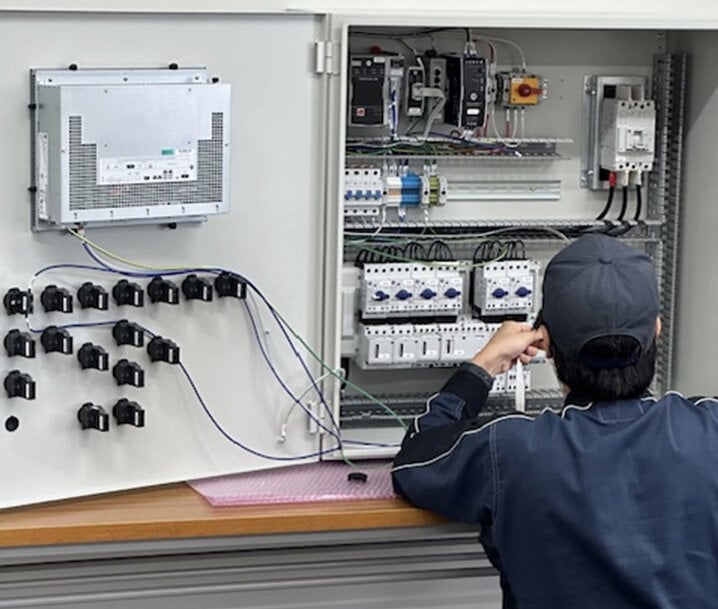
Application Area: Control Panel Manufacturing
Industry Sector: Industrial Electronics and Automation
Shinsei Kogyosha specializes in the engineering and production of low-voltage electrical panels and control panels for global industrial applications. The company recently overhauled its internal manufacturing processes by integrating a single-cable networking architecture to modernize its in-cabinet control assemblies. This operational plan aimed to address production bottlenecks associated with complex electrical routing and design.
Operational Bottlenecks in Traditional Wiring
Traditional control panel assembly presented significant operational challenges due to the high volume of individual wires required. Technicians had to accurately interpret dense wiring diagrams, physically identify wire numbers, and map out exact connection points. This manual method demanded high levels of concentration and extensive experience to prevent misreading diagrams or executing incorrect connections. The meticulous step-by-step procedure, utilizing specific markers and tools at every stage, heavily extended the duration required to complete a single control unit and increased the risk of human error.
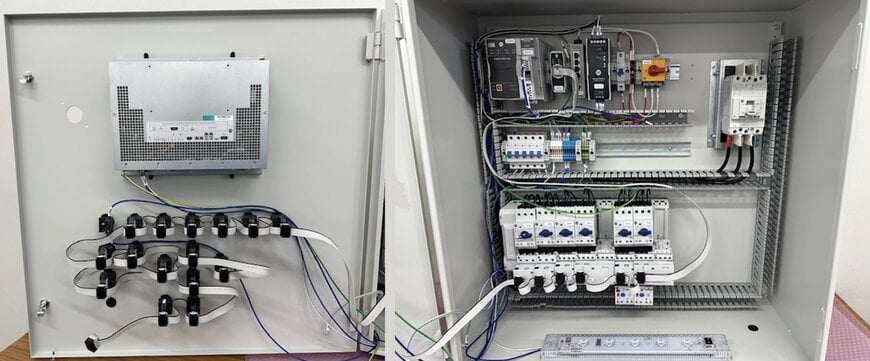
EtherNet/IP In-cabinet wiring solution
Deployment of an Ethernet-Based Infrastructure
To resolve these productivity issues, Shinsei Kogyosha implemented an EtherNet/IP In-Cabinet solution. Leveraging its expertise as a system integrator, the company transitioned from conventional point-to-point wiring to a Single Pair Ethernet architecture. This technical approach permits the simultaneous transmission of both power and data communications through a single cable configuration. By utilizing this infrastructure, the manufacturer maintained the data capacity and functional requirements of complex control panels while drastically simplifying the physical layout inside the cabinet.
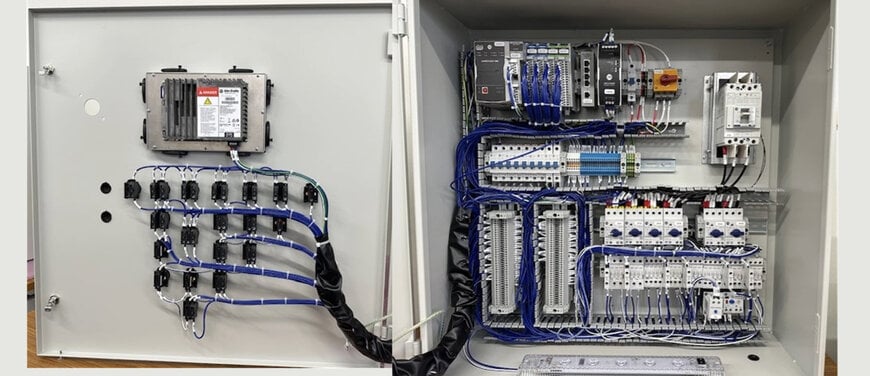
Wiring in the conventional method
Quantifiable Improvements in Production Timelines
Replacing traditional wiring with a consolidated network yielded substantial reductions in labor and engineering cycles. Based on operational evaluations, the facility reduced the time dedicated to control circuit wiring by up to 95 percent. The simplified physical architecture allowed for more intuitive assembly, alleviating the cognitive workload on technical staff. Furthermore, the standardized network approach decreased project engineering and design time by up to 30 percent, while the time required for in-cabinet control and power testing fell by up to 50 percent. These efficiency gains enabled the manufacturer to lower operational costs, shorten product delivery schedules, and sustain rigorous quality and safety standards on the production floor.
Edited by Natania Lyngdoh, Induportals Editor, with AI assistance.
www.rockwellautomation.com
Industry Sector: Industrial Electronics and Automation
Shinsei Kogyosha specializes in the engineering and production of low-voltage electrical panels and control panels for global industrial applications. The company recently overhauled its internal manufacturing processes by integrating a single-cable networking architecture to modernize its in-cabinet control assemblies. This operational plan aimed to address production bottlenecks associated with complex electrical routing and design.
Operational Bottlenecks in Traditional Wiring
Traditional control panel assembly presented significant operational challenges due to the high volume of individual wires required. Technicians had to accurately interpret dense wiring diagrams, physically identify wire numbers, and map out exact connection points. This manual method demanded high levels of concentration and extensive experience to prevent misreading diagrams or executing incorrect connections. The meticulous step-by-step procedure, utilizing specific markers and tools at every stage, heavily extended the duration required to complete a single control unit and increased the risk of human error.
EtherNet/IP In-cabinet wiring solution
Deployment of an Ethernet-Based Infrastructure
To resolve these productivity issues, Shinsei Kogyosha implemented an EtherNet/IP In-Cabinet solution. Leveraging its expertise as a system integrator, the company transitioned from conventional point-to-point wiring to a Single Pair Ethernet architecture. This technical approach permits the simultaneous transmission of both power and data communications through a single cable configuration. By utilizing this infrastructure, the manufacturer maintained the data capacity and functional requirements of complex control panels while drastically simplifying the physical layout inside the cabinet.
Wiring in the conventional method
Quantifiable Improvements in Production Timelines
Replacing traditional wiring with a consolidated network yielded substantial reductions in labor and engineering cycles. Based on operational evaluations, the facility reduced the time dedicated to control circuit wiring by up to 95 percent. The simplified physical architecture allowed for more intuitive assembly, alleviating the cognitive workload on technical staff. Furthermore, the standardized network approach decreased project engineering and design time by up to 30 percent, while the time required for in-cabinet control and power testing fell by up to 50 percent. These efficiency gains enabled the manufacturer to lower operational costs, shorten product delivery schedules, and sustain rigorous quality and safety standards on the production floor.
Edited by Natania Lyngdoh, Induportals Editor, with AI assistance.
www.rockwellautomation.com
