
www.ptreview.co.uk
18
'26
Written on Modified on
New Frameless Motor Series for Geared Actuation Systems
Alva Industries introduces the GearTorq frameless motor range utilizing FiberPrinting manufacturing technology to optimize power density inside compact geared actuator assemblies.
www.alvaindustries.com
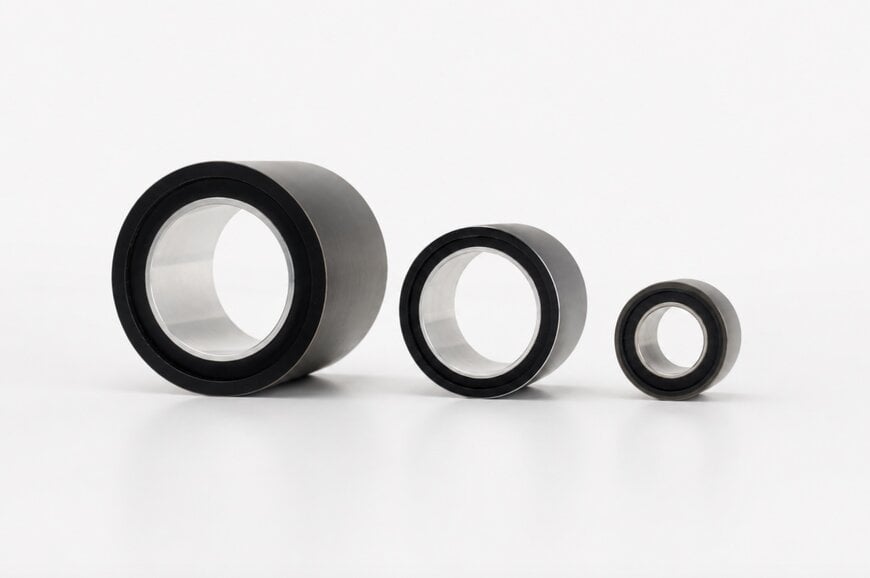
Alva Industries (ALVA) has announced the launch of GearTorq™, a new series of frameless motors developed specifically for geared applications and actuator systems. Building on the company's proprietary FiberPrinting™ manufacturing technology, the series introduces a modified motor form factor designed to maximize the use of available length in existing geared actuation designs.
Form Factor Variations and Packaging Optimization
Compared to the company's existing SlimTorq™ series, GearTorq™ motors feature a longer axial design that enables engineers to create more compact and power-dense actuator solutions. The combination of a compact outer form factor and a large inner diameter allows gear sets to be mounted directly within the motor's center, rather than being restricted to a conventional series arrangement. This structural approach assists engineers in optimizing tight packaging constraints while maintaining high performance.
The series delivers core performance characteristics required by actuator designers, including high torque density, an absence of torque saturation, and elevated peak torque capabilities. Together, these attributes support compact, power-dense actuator configurations across a wide range of geared applications.
Portfolio Expansion and Sizing Configurations
The initial product launch includes three distinct outer diameter sizes:
- 39 mm outer diameter
- 64 mm outer diameter
- 88 mm outer diameter
The series is manufactured with multiple winding choices and offers custom engineering possibilities, allowing operators to adapt the electrical parameters to specific application requirements. With this introduction, the company now offers two complementary frameless motor series:
- SlimTorq™: Optimized for applications requiring a compact axial footprint.
- GearTorq™: Optimized for geared applications and actuator systems where available length can be leveraged to maximize performance and structural integration.
The availability of both lines provides engineers with greater design flexibility when developing next-generation motion systems.
Additional Context
This section details technical specifications not included in the original news release.
Frameless motors, also known as rotor-stator kits, are delivered without a traditional integrated shaft, bearings, or outer housing. Instead, the individual components are embedded directly into the mechanical framework of the host machine. FiberPrinting manufacturing processes alter conventional stator production by utilizing advanced composite fiber deposition techniques to wind and insulate the stator coils. This automated winding method eliminates the physical air gaps and random overlapping typical of manual copper wire insertions, achieving a high slot fill factor. This localized volumetric optimization enhances thermal dissipation pathways and maximizes the magnetic flux density generated per unit volume.
Integrating a high-ratio strain wave gear or planetary gear set directly within the large internal bore of a frameless motor changes the kinematic layout of robotic joints and precision actuators. In a standard coaxial series alignment, the motor shaft connects to the input wave generator of the gear set, extending the total axial length of the joint assembly.
By expanding the stator length and matching the internal rotor diameter to the outer profile of the gear mechanism, the gear set can be nested completely inside the hollow rotor core. This concentric configuration utilizes the available longitudinal space to deliver high torque output, while minimizing the global overhang moment on adjacent structural support bearings. This cross-sectional integration also prevents magnetic flux saturation within the electrical steel laminations under heavy loads, ensuring a linear torque-to-current ratio during transient peak acceleration cycles.
Edited by Romila DSilva, Induportals Editor, with AI assistance.
Additional Context
This section details technical specifications not included in the original news release.
Frameless motors, also known as rotor-stator kits, are delivered without a traditional integrated shaft, bearings, or outer housing. Instead, the individual components are embedded directly into the mechanical framework of the host machine. FiberPrinting manufacturing processes alter conventional stator production by utilizing advanced composite fiber deposition techniques to wind and insulate the stator coils. This automated winding method eliminates the physical air gaps and random overlapping typical of manual copper wire insertions, achieving a high slot fill factor. This localized volumetric optimization enhances thermal dissipation pathways and maximizes the magnetic flux density generated per unit volume.
Integrating a high-ratio strain wave gear or planetary gear set directly within the large internal bore of a frameless motor changes the kinematic layout of robotic joints and precision actuators. In a standard coaxial series alignment, the motor shaft connects to the input wave generator of the gear set, extending the total axial length of the joint assembly.
By expanding the stator length and matching the internal rotor diameter to the outer profile of the gear mechanism, the gear set can be nested completely inside the hollow rotor core. This concentric configuration utilizes the available longitudinal space to deliver high torque output, while minimizing the global overhang moment on adjacent structural support bearings. This cross-sectional integration also prevents magnetic flux saturation within the electrical steel laminations under heavy loads, ensuring a linear torque-to-current ratio during transient peak acceleration cycles.
Edited by Romila DSilva, Induportals Editor, with AI assistance.
