
www.ptreview.co.uk
22
'26
Written on Modified on
Adapting Space-Grade Sensors for Critical Industrial Operations
Vaisala deploys micromechanical pressure and humidity monitoring systems, originally engineered for the Martian atmosphere, to enhance digital supply chain resilience.
www.vaisala.com
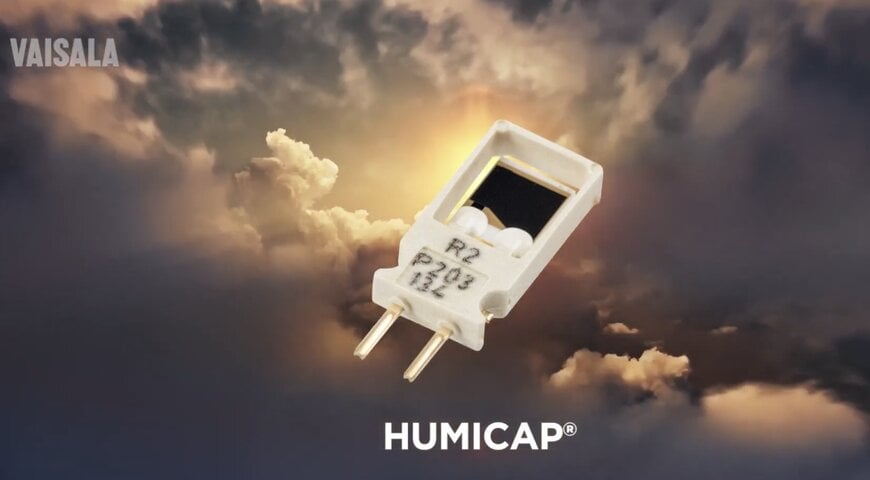
Vaisala is introducing industrial-grade measurement instruments based on the capacitive thin-film and micromechanical sensor designs utilized in planetary rovers. This technology provides precise environmental control for demanding applications, including pharmaceutical cleanrooms, high-availability data centers, and critical energy infrastructure.
Capacitive and Micromechanical Sensor Architectures
The adaptation of extra-terrestrial measurement tools to terrestrial industries centers on extreme environmental tolerance. Instruments deployed in the Jezero Crater operate in conditions featuring pressures below one percent of standard Earth atmosphere, constant radiation exposure, and severe temperature fluctuations. To function without the possibility of maintenance or recalibration, these measurement systems utilize specific hardware architectures designed to prevent mechanical fatigue. These include the HUMICAP capacitive thin-film polymer humidity sensor, which measures dielectric changes in a polymer layer as it absorbs water vapor, and the BAROCAP silicon-based micromechanical pressure sensor, which utilizes a monocrystalline silicon structure to minimize mechanical hysteresis and ensure long-term signal stability.
Operational Continuity in Controlled Environments
Applying these sensor architectures on Earth provides continuous operational data in highly demanding environments, ranging from offshore energy platforms to semiconductor fabrication plants. By maintaining calibration stability over extended periods, the sensors reduce maintenance frequency and limit personnel exposure in hazardous or controlled zones. In pharmaceutical manufacturing, precise humidity monitoring protects sensitive chemical processes and ensures strict regulatory compliance. Within the digital supply chain and high-availability data centers, accurate environmental data prevents the thermal degradation of servers, optimizing cooling energy use and maintaining operational continuity across enterprise networks.
Predictive Maintenance and Energy Infrastructure
As industrial sectors transition toward decentralized models, measurement accuracy directly impacts the management of wind and solar farms operating in variable climatic conditions. Reliable sensor data allows facility operators to detect minimal pressure variations that indicate potential system failures, enabling hardware diagnostics before unexpected shutdowns occur. Alberto Cortes, LAM Director for Industrial Measurements at Vaisala, stated that operating accurately in severe environments establishes a reliability standard applicable to power plants and critical industrial facilities, noting that baseline data quality directly influences productivity and hardware resource optimization.
Additional Context
This section details technical specifications and competitive benchmarking not included in the original news release.
In the industrial environmental sensing market, capacitive polymer humidity sensors and silicon micromechanical pressure sensors compete directly with architectures developed by manufacturers such as E+E Elektronik and Process Sensing Technologies. Benchmarking for these specialized devices typically evaluates long-term drift characteristics, which are often required to remain below 0.1 percent of full scale per year for micromechanical pressure sensors, and precision tolerances ranging from 0.8 percent to 1.0 percent relative humidity for industrial capacitive models. While traditional resistive humidity sensors frequently suffer from chemical contamination and condensation damage, thin-film capacitive sensors utilize heated probe architectures to recover rapidly from moisture saturation, maintaining measurement integrity in highly condensing environments. Silicon-based absolute pressure sensors are similarly evaluated on temperature dependence and structural fatigue, with monocrystalline silicon providing near-zero mechanical degradation when compared to conventional metallic strain gauges.
Edited by Aishwarya Mambet, Induportals Editor, with AI assistance.
www.vaisala.com
