
www.ptreview.co.uk
02
'25
Written on Modified on
Datalogic Differentiates IoT Device Management With Unified Enterprise Control
Remote visibility, automated enrollment, open MDM integration, and predictive diagnostics support large-scale scanner and mobile computer fleets across retail, logistics, and field operations.
www.datalogic.com
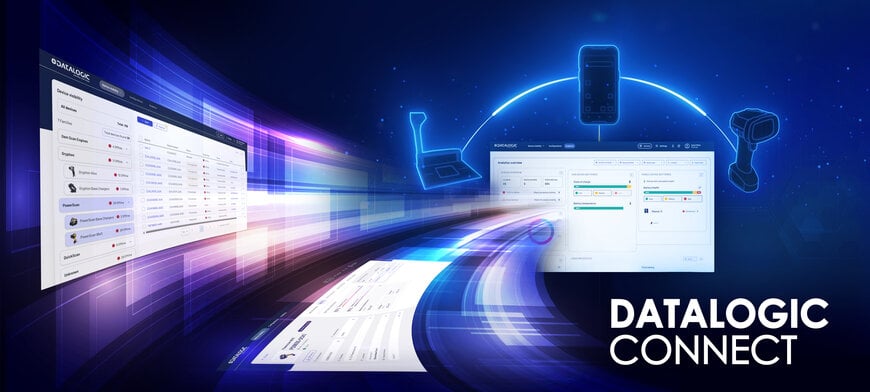
Across retail stores, logistics warehouses, manufacturing sites, and mobile field operations, enterprises increasingly depend on large fleets of scanners, mobile computers, and fixed data capture devices to drive productivity and process accuracy. Managing these distributed assets at scale has become a critical IT and operational challenge. In response, Datalogic has introduced Datalogic Connect, a centralized IoT platform designed to remotely manage, monitor, and optimize the entire lifecycle of deployed data capture devices.
Differentiation Through Unified Hardware-to-Software Fleet Control
Unlike traditional device management tools limited to basic monitoring, Datalogic Connect is engineered as a native extension of Datalogic’s hardware ecosystem, enabling seamless end-to-end fleet governance from a single digital interface. The platform allows enterprises to locate, configure, monitor, and troubleshoot mobile computers, handheld scanners, and fixed retail scanners remotely and securely, regardless of deployment geography.
This tight integration between hardware and platform software differentiates Datalogic from generic MDM providers by delivering device-level visibility and diagnostics that are deeply optimized for data capture environments.
Real-Time Visibility, Remote Configuration, and Predictive Analytics
The platform delivers continuous real-time asset visibility, including connectivity status, battery health, warranty coverage, and physical location. Remote configuration capabilities enable enterprises to deploy firmware updates, enforce standardized configurations, and schedule task automation across thousands of devices simultaneously, ensuring compliance and cybersecurity alignment without physical intervention.
Advanced analytics introduce smart diagnostics, anomaly detection, predictive maintenance, and performance benchmarking, allowing organizations to identify underperforming assets, forecast battery replacements, and optimize scan throughput before failures impact operations. This shift from reactive maintenance to proactive fleet optimization directly reduces downtime and operating costs.
Enterprise-Scale Deployment Without Manual Enrollment Constraints
A key competitive advantage of Datalogic Connect lies in its automatic real-time discovery and enrollment of new devices, eliminating the need for manual serial number uploads when onboarding large fleets. This capability dramatically accelerates enterprise-scale deployment compared with conventional device management systems.
Additionally, the platform’s open architecture allows integration with existing MDM environments, enabling customers to extend their current IT frameworks rather than replace them. This interoperability removes a major adoption barrier for enterprises already operating multi-vendor mobility infrastructures.
Subscription-Based Platform Model for Long-Term Operational Continuity
Datalogic Connect is delivered through a recurring subscription licensing model, supporting continuous platform evolution, software updates, and long-term service continuity. This model aligns with enterprise IT strategies focused on operational resilience, predictable lifecycle costs, and long-term digital transformation rather than one-time infrastructure investments.
Scalable Global Availability Across the Data Capture Portfolio
The platform is globally available, with initial deployment centered on the Device Visibility capability across a wide range of Datalogic devices. Planned platform expansions will activate enhanced remote configuration and advanced analytics, along with broader enablement across the full Datalogic Mobile and Data Capture product portfolio. This phased activation allows organizations to scale functionality progressively as operational complexity increases.
