
New Modules Extend Qseven COM Viability and Performance
Tria Technologies introduces Intel-based Q7 modules enabling long-term embedded designs with higher compute capability and extended life-cycle support.
www.tria-technologies.com
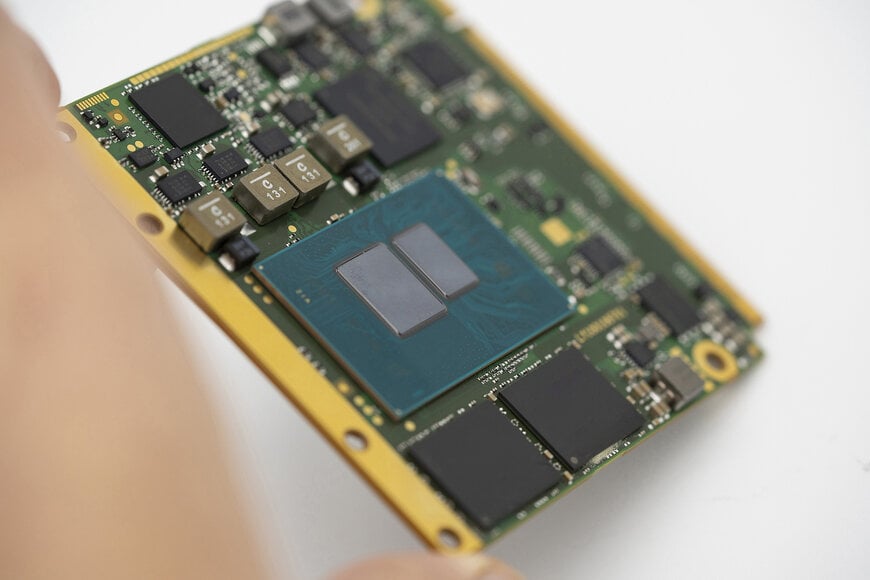
Long-lifecycle embedded systems in medical devices, transportation HMIs, industrial automation, IoT gateways and point-of-sale terminals depend on form factors that remain stable for more than a decade. To support these requirements, Tria Technologies released two new Qseven (Q7) Computer-on-Modules designed to keep the Q7 standard viable for deployments extending to at least 2034, with optional support to 2039.
How the new Q7 modules extend system lifetime for industrial applications
Embedded projects in regulated or long-service environments often face redesign cycles triggered by component obsolescence. The new TRIA-Q7-ASL and TRIA-Q7-ALN modules were introduced to provide a modern processor roadmap within the long-established Q7 2.1 form factor, helping system designers maintain continuity without altering carrier boards or system architecture.
The modules incorporate Intel’s “Amston Lake” and “Alder Lake N” platforms, enabling significant performance uplift while preserving compatibility with existing Q7 infrastructure. Tria confirmed that the modules secured availability commitments extending well into the next decade.
Processor architectures and graphics capabilities
The Q7-ASL module integrates Intel Atom x7000RE/C Series processors designed for high reliability in continuous-operation systems.
The Q7-ALN expands options with Intel Atom x7000E, Intel Core i3, and Intel N-Series SoCs, suitable for mid-range compute or graphics-intensive interfaces.
Both modules offer:
- up to 8 CPU cores
- Intel UHD Graphics (Xe architecture)
- support for three independent 4K displays
- LPDDR5 memory up to 32 GB
These specifications align with modern embedded display requirements, especially in medical HMIs, retail signage controllers and industrial visualization systems.
Interface support and connectivity
The Q7 modules include a set of standard interfaces required in current embedded platforms:
- USB 3.1
- PCIe Gen3 for expansion
- eMMC 5.1 for onboard storage
- Gigabit Ethernet based on Intel i226 with up to 2.5 GbE capability
This combination provides sufficient bandwidth for edge computing workloads, networked industrial equipment and data-rich IoT deployments.
Suitability for harsh environments
The Q7-ASL variant supports an extended temperature range from –40°C to +85°C and is designed for 24/7 continuous operation, making it suitable for transportation systems, outdoor signage and rugged industrial controllers.
This ensures that designers working with extreme thermal conditions can maintain compliance within the Q7 ecosystem.
Design-in support and development tools
To simplify evaluation, Tria offered a Q7 2.1 development platform and a ready-to-run Starterkit, enabling engineers to prototype and validate both modules without redesigning existing carrier boards. This assists teams looking to upgrade compute performance while preserving mechanical, thermal and certification baselines.
Competitive context in the COM market
Comparable Computer-on-Module offerings include:
- congatec conga-QAX / Qseven lines with Atom and Celeron processors
- SECO Qseven modules supporting low-power embedded Intel platforms
- Kontron Qseven modules with extended temperature variants
Tria’s approach differs by offering explicit lifecycle extension to 2034–2039, which is not uniformly guaranteed across competing Q7 portfolios. This is a critical decision factor in industrial and medical markets where requalification costs are high.
Industry perspective
Tria stated that the new modules enabled engineers to increase performance while retaining existing Q7-based designs, reducing redesign time and supporting long-term reliability requirements in regulated industries.
Conclusion
By combining modern Intel architectures with guaranteed long-life availability and Q7-form-factor continuity, Tria Technologies provided a clear upgrade path for embedded systems that must remain operational for more than a decade. The modules strengthened the viability of the Q7 standard in applications requiring predictable lifecycles, stable interfaces and scalable compute performance.
www.tria-technologies.com
