
www.ptreview.co.uk
16
'26
Written on Modified on
3D vision enables automated mixed-case palletizing
Photoneo MotionCam-3D and partners deliver real-time perception for stable, automated pallet building.
www.photoneo.com
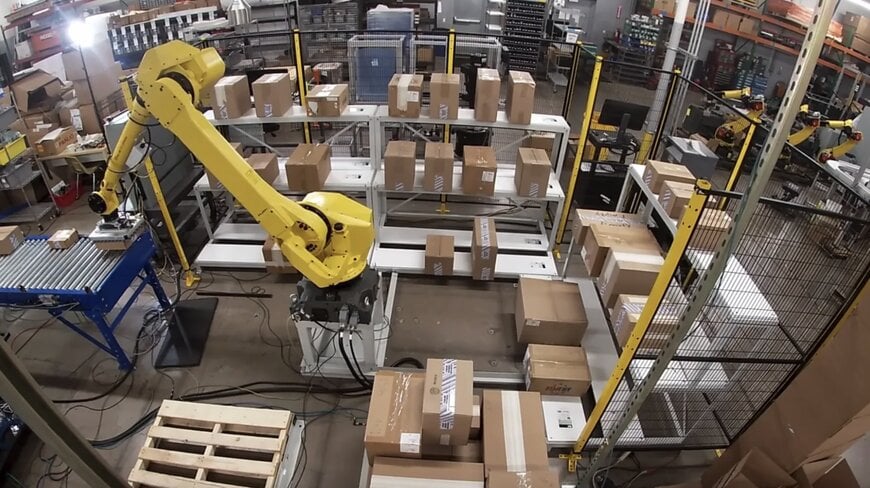
A major defense manufacturer faced operational challenges at its shipping dock, where workers manually built pallets from a continuous flow of unsequenced parcels. The process involved boxes of varying sizes, weights and conditions, creating a complex and physically demanding task.
This “brownfield” environment lacked pre-sorting or structured workflows, making traditional automation approaches ineffective. Without consistent input data, robotic systems could not reliably plan or execute palletizing tasks.
The key limitation was the absence of real-time, high-quality visual data. Without accurate perception, robots were unable to adapt to constantly changing conditions on the conveyor.
Integrating vision, software and robotics
To address this challenge, a multi-partner solution was implemented, combining:
- Photoneo – 3D vision technology
- Jacobi Robotics – palletizing software
- Delta Technology – system integration
- FANUC – robotic hardware
At the core of the system is the MotionCam-3D vision system, which provides real-time 3D perception of moving objects.
Real-time 3D perception as the foundation
The MotionCam-3D captures high-resolution 3D point clouds of parcels directly on the moving conveyor, eliminating the need to stop or sequence items.
This enables two critical functions:
1. Infeed scanning and quality control
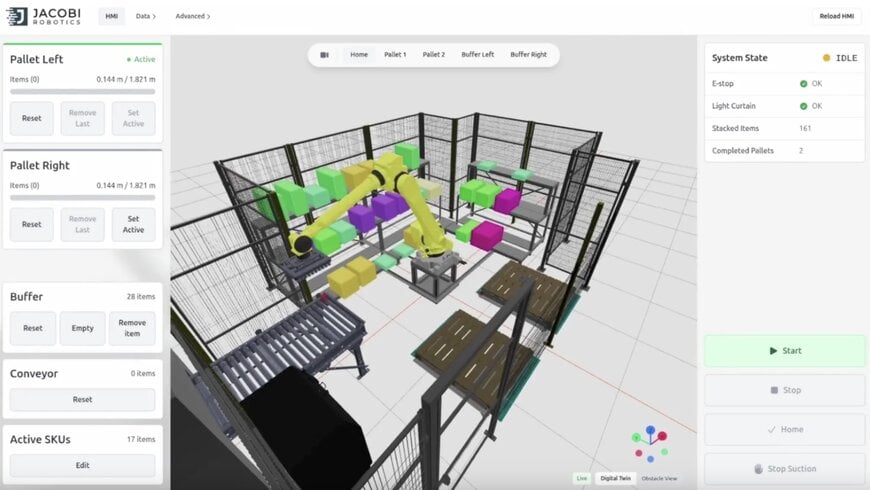
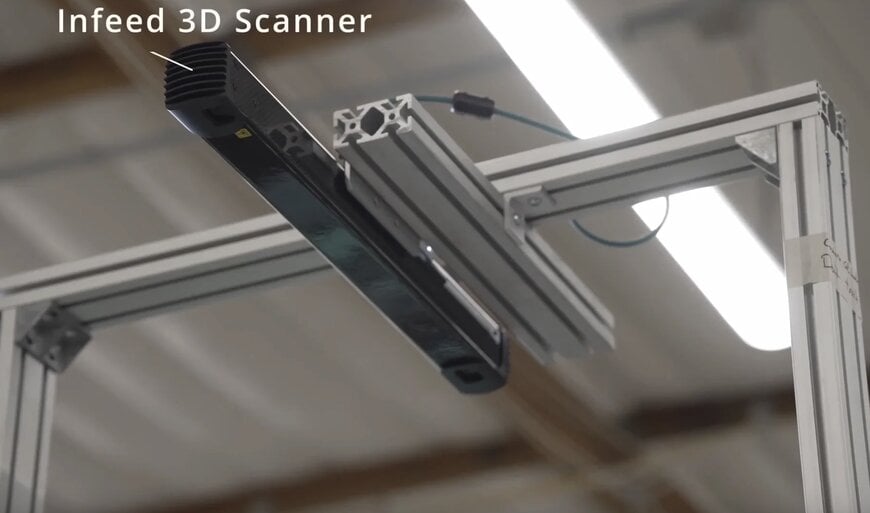
The system measures the exact dimensions and orientation of each box in real time. This data is sent to Jacobi’s palletizing software, which calculates optimal placement.
In addition, the system detects defects such as crushed corners or open flaps. Damaged items are rejected before entering the palletizing process, preventing instability and downstream issues.
2. Placement verification and stability control
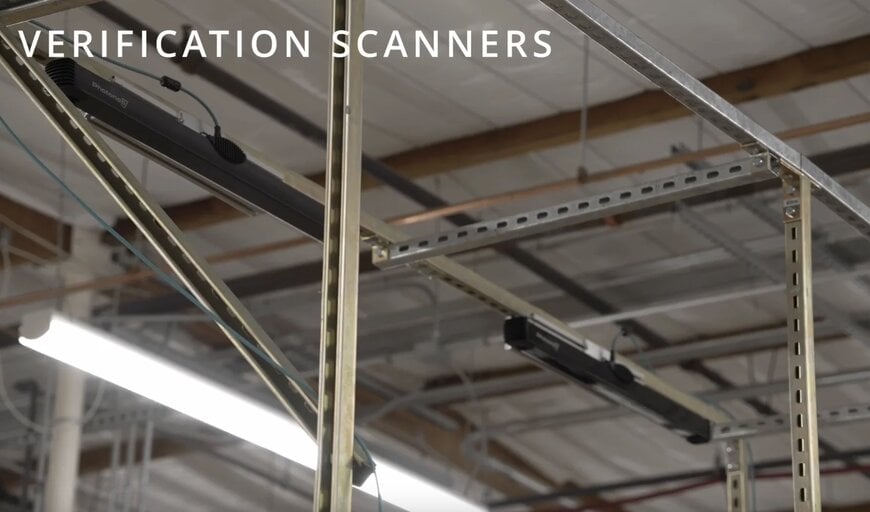
After each placement, a second scan verifies that the box is positioned correctly. The system continuously monitors the pallet structure, ensuring that each layer remains stable and aligned.
From “blind automation” to adaptive systems
Traditional palletizing systems rely on predefined patterns and consistent inputs. In contrast, this solution operates in a fully dynamic environment where each incoming item differs from the previous one.
The integration of real-time 3D vision allows the system to adapt continuously, providing accurate input data for path planning and execution. This transforms palletizing from a fixed process into a responsive, data-driven operation.
Measurable improvements in performance
The deployment delivered several operational benefits:
Real-time 3D perception as the foundation
The MotionCam-3D captures high-resolution 3D point clouds of parcels directly on the moving conveyor, eliminating the need to stop or sequence items.
This enables two critical functions:
1. Infeed scanning and quality control
The system measures the exact dimensions and orientation of each box in real time. This data is sent to Jacobi’s palletizing software, which calculates optimal placement.
In addition, the system detects defects such as crushed corners or open flaps. Damaged items are rejected before entering the palletizing process, preventing instability and downstream issues.
2. Placement verification and stability control
After each placement, a second scan verifies that the box is positioned correctly. The system continuously monitors the pallet structure, ensuring that each layer remains stable and aligned.
From “blind automation” to adaptive systems
Traditional palletizing systems rely on predefined patterns and consistent inputs. In contrast, this solution operates in a fully dynamic environment where each incoming item differs from the previous one.
The integration of real-time 3D vision allows the system to adapt continuously, providing accurate input data for path planning and execution. This transforms palletizing from a fixed process into a responsive, data-driven operation.
Measurable improvements in performance
The deployment delivered several operational benefits:
- 100% pallet stability, verified through continuous scanning
- Early detection of damaged goods, preventing faults and downtime
- Improved packing density, reaching up to 90% utilization
- No downtime due to unexpected inputs, as all items are analyzed in real time
- High simulation accuracy, with real-world performance matching digital models
These results demonstrate the effectiveness of combining vision, software and robotics in complex logistics environments.
Enabling scalable warehouse automation
The project highlights the importance of accurate perception in automation. By providing reliable, real-time data, 3D vision systems enable robots to operate in environments that were previously considered too unpredictable for automation.
The case shows how integrated solutions—combining vision, planning software, robotics and system integration—can transform manual, high-risk processes into stable and scalable automated operations.
Edited by Romila DSilva, Induportals Editor, with AI assistance.
Enabling scalable warehouse automation
The project highlights the importance of accurate perception in automation. By providing reliable, real-time data, 3D vision systems enable robots to operate in environments that were previously considered too unpredictable for automation.
The case shows how integrated solutions—combining vision, planning software, robotics and system integration—can transform manual, high-risk processes into stable and scalable automated operations.
Edited by Romila DSilva, Induportals Editor, with AI assistance.
