
www.ptreview.co.uk
20
'26
Written on Modified on
Physical AI Expands Adaptive Factory Robotics
FANUC CORPORATION collaborates with Google to integrate AI-driven robot control into industrial automation systems for manufacturing applications.
www.fanuc.eu
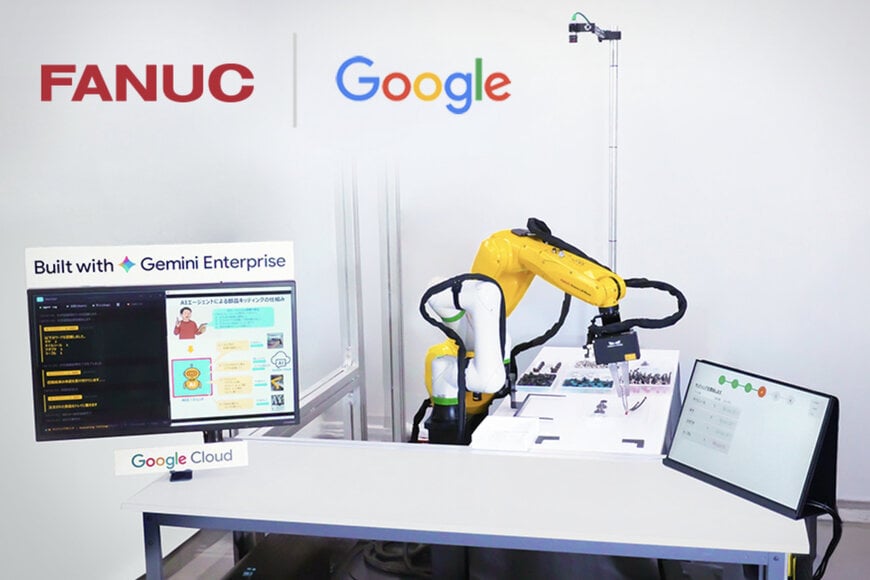
FANUC CORPORATION and Google are working together to accelerate deployment of Physical AI in industrial robotics by combining robot control systems with artificial intelligence technologies. The collaboration focuses on enabling autonomous robot operation in manufacturing environments through open software architectures and AI-compatible interfaces.
Open platforms support AI integration in industrial robots
The cooperation targets manufacturing sectors requiring adaptive automation for variable production processes. Physical AI systems combine environmental perception, autonomous decision-making and robotic execution, supporting applications where conventional programmed automation may be limited by changing conditions or task complexity.
The collaboration builds on compatibility with Robot Operating System (ROS), an industry-standard framework for robot control and development. Google contributes to ROS development through its Intrinsic robotics AI group, while FANUC provides industrial robot platforms and open interfaces designed for AI integration.
The systems also support Python-based AI development environments, high-speed communication interfaces for external robot control and programmable logic controller (PLC) integration. These capabilities allow AI systems to interact with robotic hardware through standardized interfaces, reducing deployment barriers in existing industrial environments.
Robotics portfolio spans payloads from 3 kg to 2.3 tonnes
The implementation combines AI-driven control capabilities with industrial robots ranging from 3 kg payload systems to models supporting payloads up to 2.3 tonnes, including collaborative robot series.
The architecture is intended to enable manufacturers to integrate Physical AI into production environments without replacing existing automation infrastructure. Open platform support may simplify interoperability between AI models, robot controllers and factory systems.
The collaboration follows the introduction of a Physical AI system at the International Robot Exhibition in Tokyo, Japan, in December 2025.
More than 1,000 AI-related robot shipments reported
More than 1,000 robots associated with Physical AI applications were shipped following the system’s introduction. While operational performance metrics were not disclosed, adoption indicates increased interest in AI-enabled robotics designed to address production variability and support autonomous decision processes.
“Manufacturers are moving beyond the question of whether to use AI and focusing on how to apply it where it matters most—on the factory floor,” said Mike Cicco, President and CEO of FANUC America. “By combining FANUC’s industrial-grade robotics with Google’s advanced AI, we’re enabling customers to take on more complex, variable production while maintaining the reliability and performance that production environments demand.”
Standardized interfaces drive broader AI deployment
The collaboration reflects a wider industry trend toward integrating AI models with robotics through open ecosystems such as ROS. Standardized interfaces and AI-compatible programming frameworks are increasingly used to reduce deployment complexity and improve interoperability between robot systems and external AI platforms.
Edited by Natania Lyngdoh, Induportals editor, assisted by AI.
www.fanuc.com
