
Hardware Security Integration for Autonomous Physical Artificial Intelligence Systems
Infineon Technologies and NVIDIA collaborate to implement post-quantum resilient cryptographic hardware on the Jetson Thor platform for industrial robotics applications.
www.infineon.com
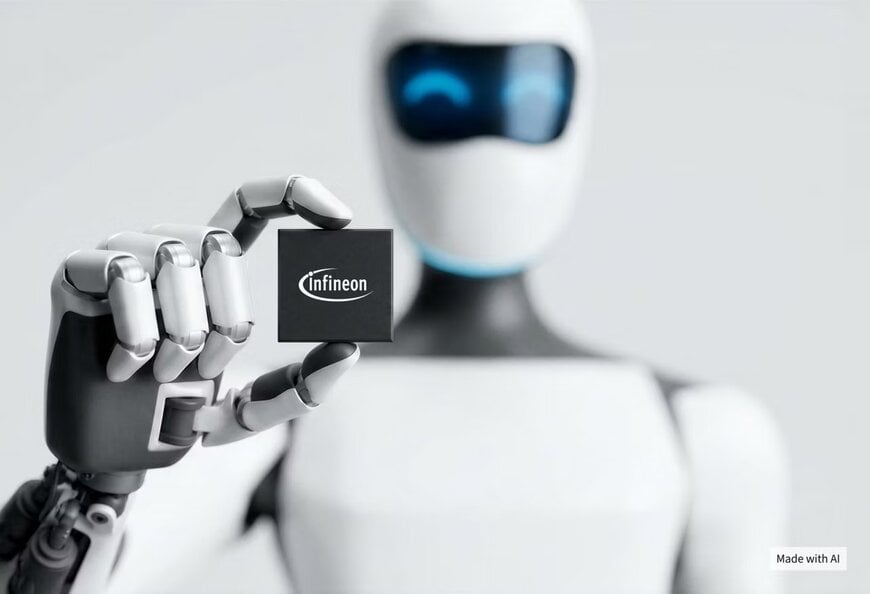
Infineon Technologies and NVIDIA have collaborated to integrate the OPTIGA Trusted Platform Module (TPM) SLB 9672 with the Jetson Thor hardware computing platform. This cooperation establishes a certified, quantum-resilient root of trust for physical artificial intelligence (AI) systems. The technical integration secures robotic and autonomous platforms transitioning from controlled operational environments to public and industrial spaces, mitigating risks associated with data vulnerabilities, operational disruptions, and regulatory non-compliance.
Industrial Challenges and Regulatory Alignment
The joint integration addresses the functional requirement for demonstrable and auditable security at the hardware level. Current regulatory frameworks and standards, including the EU Cyber Resilience Act, the EU AI Act, and IEC 62443 for industrial systems, require verifiable security architectures for robotics deployed in healthcare, logistics, and automotive sectors. By embedding hardware-level security at the design-in stage, device manufacturers can manage long-term commercial compliance and system resilience.
System Architecture and Component Integration
Under this cooperation, Infineon supplies the OPTIGA TPM technology, which functions as a physically isolated, FIPS and Common Criteria-certified hardware component separated from the main application processor. NVIDIA integrates this security module into the Jetson Thor edge computing architecture. The integrated TPM facilitates measured boot sequences and remote attestation, enabling operators to cryptographically verify the integrity of the software stack throughout the operational lifecycle of the machine. The architecture also provides hardware-protected storage for proprietary AI model keys, encrypted communication protocols, and cryptographically signed over-the-air firmware updates.
Post-Quantum Cryptography Implementation
The deployed TPM incorporates a firmware update mechanism secured by post-quantum cryptography to prevent structural compromise from evolving decryption capabilities. The platform architecture establishes a hardware security foundation designed to protect deployed systems against current and emerging cryptographic threats. The technological roadmap aligns with mandatory compliance requirements for post-quantum standards by embedding algorithms such as ML-KEM and ML-DSA, which were standardized by the US National Institute of Standards and Technology (NIST) in 2024. This integration allows autonomous system fleets to fulfill long-term deployment parameters without requiring subsequent hardware interventions.
Operational Perspectives
Dr. Stephan Zizala, Division President of Connected Secure Systems at Infineon, indicated that the TPM module provides a hardware root of trust to the Jetson Thor platform, engineered to meet the long-lifecycle and real-time operational demands of robotic deployment at scale. Deepu Talla, Vice President of Robotics and Edge AI at NVIDIA, stated that the certified module enables developers to protect cryptographic keys, verify software integrity, and securely provision robot fleets, establishing a hardware-based foundation for resilient autonomous systems.
Edited by an industrial journalist, Lekshman Ramdas, with AI assistance.
www.infineon.com
