
www.ptreview.co.uk
23
'26
Written on Modified on
NVIDIA Launches Halos, Industry’s First Full-Stack Robotics Safety System
New platform unifies AI compute, software and certification tools to accelerate safe deployment of physical AI and humanoid robots.
www.nvidia.com
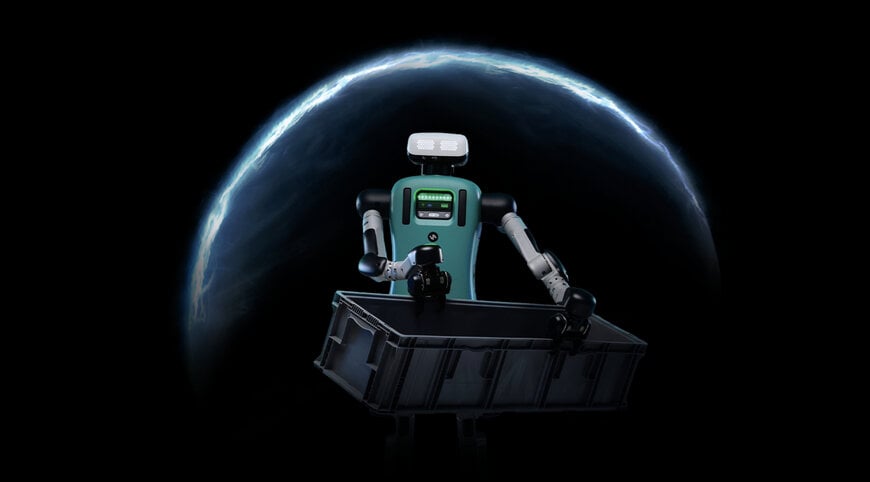
NVIDIA has launched Halos for Robotics, a full-stack, open safety architecture designed to integrate artificial intelligence computation and sensor connectivity for physical AI systems. The solution targets autonomous machines and humanoid platforms operating in dynamic environments across factory, warehouse, and logistics applications, where human-robot interaction requires continuous spatial awareness and rapid decision-making.
Extending Autonomous Vehicle Safety Protocols to Industrial Operations
Drawing upon more than 18,600 engineering years of autonomous vehicle safety development, the architecture provides a unified framework for building, validating, and deploying robotics systems. By standardizing the safety infrastructure, the platform eliminates the need for developers to engineer disparate safety systems for computation, sensors, software, and certification. Deepu Talla, vice president of robotics and edge AI at NVIDIA, stated that developers and system builders can utilize this autonomous vehicle safety foundation to engineer safer robots and integrate them into industrial operations alongside workers.
Hardware and Software Stack for Real-Time Computation
The system utilizes the NVIDIA IGX Thor platform and the Holoscan Sensor Bridge to deliver industrial-grade AI processing capabilities alongside secure sensor integration. This hardware foundation incorporates built-in safety mechanisms and advanced error management, enabling the system to meet stringent functional safety standards, including IEC 61508 and ISO 13849. The software layer, known as Halos OS, includes Halos Core to handle safety-critical operating functions. It also features the Halos Outside-In Safety Blueprint, an application framework that extends spatial perception by connecting external facility cameras and AI agents to dynamically control robot behavior based on real-time environmental data.
Ecosystem Integration and Third-Party Certification Alignment
Agility, a developer of humanoid robotics, is integrating the IGX Thor compute module and Halos Core software into the proprietary human detection system of its Digit robot. This integration supports safe operation in manufacturing and warehouse logistics for clients such as Amazon, GXO, Schaeffler, and Toyota Motor Manufacturing Canada. Peggy Johnson, CEO of Agility, noted that implementing the Halos system validates safety across the entire stack, establishing a requirement for bringing humanoids into industrial workflows. To facilitate regulatory compliance, the NVIDIA Halos AI Systems Inspection Lab operates as an ANSI National Accreditation Board-accredited program. It evaluates robotic AI systems against recognized safety requirements to prepare partners for certification by independent bodies including TÜV Rheinland, UL Solutions, TÜV SÜD, exida, SGS, and CertX. The broader Halos ecosystem includes software support from Acontis, FreeRTOS, and QNX, alongside embedded systems from Advantech and NexCobot. Sensor and silicon integration is provided by Infineon, NXP Semiconductors, STMicroelectronics, and Texas Instruments. Industrial applications utilizing the Outside-In Safety Blueprint are being developed by FORT Robotics, Inventec, KION Group, Lyte AI, and Neurealm.
Availability of the Halos Architecture
NVIDIA Halos Core for NVIDIA IGX is available in early access for registered developers utilizing Linux and Linux plus QNX OS for Safety 8.0 configurations. Additionally, the open-source NVIDIA Halos Outside-In Safety Blueprint is accessible in early access via GitHub.
Additional Context:
This section details technical specifications and competitive benchmarking not included in the original product announcement
The industrial robotics safety market traditionally relies on discrete functional safety controllers and programmable logic controllers from manufacturers such as SICK, Pilz, and Rockwell Automation. These conventional inside-out safety mechanisms typically employ onboard sensors and enforce bounded operating constraints, requiring systems integrators to design and validate complex, custom safety architectures for each individual deployment. In contrast, the NVIDIA Halos for Robotics system provides a unified, full-stack platform that combines high-performance AI processing via the IGX Thor platform with comprehensive, pre-validated safety software. By incorporating the Outside-In Safety Blueprint, the NVIDIA architecture leverages external infrastructure sensors and visual AI agents to modulate robot efficiency dynamically, offering a broader situational awareness mechanism compared to standard localized safety scanners. The platform also facilitates compliance with emerging artificial intelligence safety standards, including ISO/IEC TR 5469, distinguishing it from strictly hardware-focused localized safety components.
Edited by Natania Lyngdoh, Induportals editor, assisted by AI.
www.nvidia.com
