
www.ptreview.co.uk
09
'26
Written on Modified on
Siemens digitalizes Galp’s 100 MW renewable hydrogen project in Portugal
Hydrogen Performance Suite uses a predictive digital twin to optimize operations, targeting 15% energy savings and 110,000 tonnes annual CO₂ reduction.
www.siemens.com
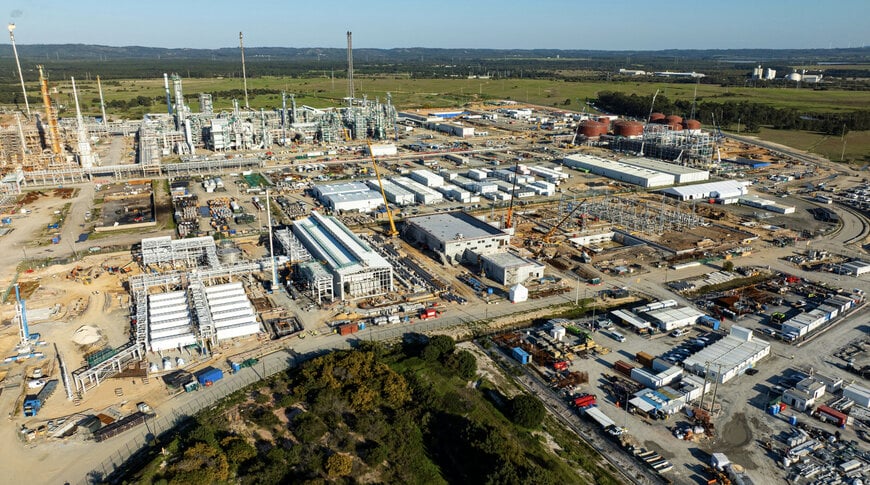
Large-scale water electrolysis plants face severe operational challenges tied to dynamic electricity tariffs, intermittent renewable power supply, and multi-variable stack degradation, which complicate real-time efficiency and levelized cost management. To resolve these process-control and energy-dispatch complexities, industrial technology supplier Siemens is deploying its software portfolio for the hydrogen industry to digitalize Galp Energia's 100 MW GalpH2Park facility in Sines, Portugal.
Predictive Physics-Based Digital Process Twin
The core architecture centers on the Siemens Hydrogen Performance Suite (HPS), an operational software cockpit configured for continuous facility optimization. The software platform executes a predictive digital process twin that couples first-principles thermodynamic and electrochemical models with physical plant measurements. Rather than relying solely on empirical data points, this physics-based modeling architecture simulates gas-liquid mass transfer, cell voltage behavior, thermal dissipation, and membrane hydration dynamics across operational states.
The suite runs an integrated software stack that provides real-time process modeling, analytics, and operational visualization. By continuously reconciling measured plant sensor data with underlying physics equations, the system identifies operational deviations, prevents cell over-potential spikes, and calculates optimal setpoints for hydrogen generation without accelerating stack degradation mechanisms.
Energy Market Dispatch and Closed-Loop Production Scheduling
Industrial hydrogen production economics depend heavily on electricity input costs, which represent up to 70 to 80 percent of overall operating expenditure. The Hydrogen Performance Suite integrates live plant telemetry with external market inputs, including electrical grid operator signals and spot power markets.
Operators use this bidirectional connectivity to automate dynamic production scheduling based on forecast power prices, renewable generation capacity, and plant ramp constraints. Integrating facility load modulation with grid dynamics enables optimized energy procurement, with operational modeling indicating potential electrical energy savings of up to 15 percent across system duty cycles.
Industrial Decarbonization and Sines Refinery Integration
The first phase of the GalpH2Park plant utilizes dedicated renewable power from Galp's renewable generation portfolio alongside long-term corporate power purchase agreements. The 100 MW electrolyzer configuration is engineered to produce up to 15,000 tons of renewable hydrogen per year, targeting an annual greenhouse gas reduction of approximately 110,000 tons of CO2 equivalent in Scope 1 emissions. Axel Lorenz, Executive Vice President Automation Process Industries at Siemens, stated that software-driven optimization and digital innovation represent critical levers for industrial-scale renewable hydrogen facilities to achieve commercial viability while accelerating industrial decarbonization.
Beyond process-twin software, the deployment integrates with plant-wide automation architectures, including supervisory control and data acquisition (SCADA), distributed control systems (DCS), safety instrumented systems, power distribution networks, and variable frequency drive controls to maintain electrical balance-of-plant stability.
Additional Context:
This section details technical specifications and competitive benchmarking not included in the original product announcement.
The GalpH2Park deployment at Sines operates alongside the existing Sines oil refinery, replacing roughly 20 percent of the site's conventionally produced, fossil-based gray hydrogen with renewable output to fulfill EU Renewable Energy Directive (RED II / RED III) mandates for industrial fuels. The physical electrolysis infrastructure relies on proton exchange membrane (PEM) technology, featuring ten 10 MW GenEco modular containerized electrolyzers engineered and delivered by Plug Power. PEM systems offer rapid sub-second ramp rates and wider dynamic turndown ranges (typically 5 to 100 percent of rated load) compared to traditional pressurized alkaline electrolysis systems (which typically operate within a 20 to 100 percent load window and exhibit slower thermal ramp dynamics). However, PEM stacks require rigorous real-time monitoring to prevent membrane drying, localized overheating, and accelerated catalyst degradation during rapid transient power cycling.
In industrial process automation and digital optimization, Siemens' Hydrogen Performance Suite competes directly with specialized industrial process suites, including AspenTech's Aspen HYSYS Hydrogen Modeling and Emerson's Ovation Green and Plantweb Digital Twin frameworks.
AspenTech focuses primarily on steady-state and dynamic chemical engineering simulation, integrating rigorous thermophysical property databases and kinetic models to optimize system-level plant design, heat integration, and balance-of-plant sizing. Emerson's Plantweb and Ovation platforms focus on distributed control, functional safety management, and power-grid synchronization, utilizing model-predictive control algorithms calibrated to maintain balance-of-plant stability across renewable microgrids.
Siemens' competitive architecture differentiates itself by bridging real-time Distributed Control System (DCS) integration via SIMATIC PCS neo and PCS 7 with energy market forecasting APIs and predictive electrochemical twin simulations. This provides an end-to-end operational optimization loop capable of dynamically altering megawatt-level setpoints based on real-time euro-per-megawatt-hour market conditions.
Edited by Natania Lyngdoh, Induportals editor, with AI assistance.
www.siemens.com
