
www.ptreview.co.uk
07
'26
Written on Modified on
Industrial AI Operating System for Manufacturing
Siemens and NVIDIA expand a long-term collaboration to integrate AI, simulation, and automation into a unified software-defined foundation for industrial engineering, production, and operations.
www.nvidia.com
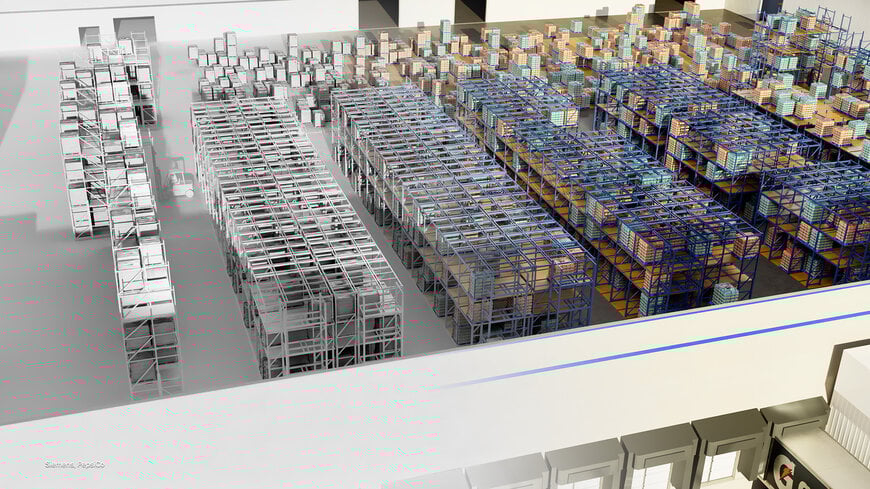
The expanded collaboration between Siemens and NVIDIA focuses on building an industrial AI operating system that connects design, simulation, manufacturing, and operations through AI-accelerated digital twins. The approach targets data-intensive industries such as manufacturing, electronics, logistics, and automotive, where real-time optimization across the digital supply chain is constrained by fragmented software and limited simulation performance.
Why the Technology Is Relevant
Industrial systems increasingly rely on high-fidelity digital twins, but most remain static representations used primarily during design or commissioning. Siemens and NVIDIA position AI as a continuous control layer that links simulation models with live operational data. The technical novelty lies in combining GPU-accelerated simulation, AI physics models, and software-defined automation so that factories can evaluate changes virtually and apply validated outcomes directly to production systems.
At the Consumer Electronics Show in Las Vegas in January 2026, the companies announced that NVIDIA will provide AI infrastructure, models, simulation libraries, and frameworks, while Siemens will contribute industrial automation software, hardware platforms, and domain-specific AI expertise. The goal is to support closed-loop optimization from engineering through operations, rather than isolated AI applications.
Architecture Across the Industrial Lifecycle
The proposed industrial AI operating system integrates Siemens industrial software with NVIDIA’s accelerated computing stack. GPU acceleration is being extended across Siemens’ entire simulation portfolio, enabling larger models and higher temporal resolution. Support for CUDA-X libraries and AI physics models allows simulations to scale from component-level behavior to full production lines.
Factories are designed to operate with an “AI brain,” where software-defined automation systems continuously analyze digital twins, test alternative configurations, and deploy parameter changes to the shopfloor. This mechanism reduces commissioning time and operational risk by validating process changes in simulation before execution. Siemens plans to apply this architecture first at its Electronics Factory in Erlangen, Germany, starting in 2026, as a reference implementation for adaptive manufacturing.
Electronic Design Automation and Semiconductor Workflows
A core technical focus is electronic design automation for accelerated computing systems. Siemens is integrating GPU acceleration, CUDA-X libraries, and AI physics models into its EDA tools, particularly for verification, layout, and process optimization. According to the companies, targeted performance gains range from two to ten times in selected workflows, achieved through parallel simulation and AI-assisted optimization.
Generative simulation techniques based on PhysicsNeMo and open models are intended to create autonomous digital twins capable of real-time design iteration and yield optimization. These capabilities are relevant for semiconductor manufacturing and AI hardware development, where design complexity and verification costs continue to rise.
AI Factories and Infrastructure Design
Beyond production lines, the partnership addresses the design of AI factories themselves. Siemens and NVIDIA are developing a repeatable blueprint for facilities that combine high-density computing with industrial automation. Technical considerations include power distribution, cooling efficiency, grid integration, and lifecycle optimization from planning through operations.
By linking Omniverse-based simulation with Siemens electrification and automation systems, the blueprint aims to reduce energy losses and improve operational resilience. This infrastructure-centric approach aligns with the growing demand for industrial-scale AI data centers that must operate within strict efficiency and reliability constraints.
Operational Validation and Early Use Cases
Both companies plan to deploy the jointly developed technologies within their own operations before offering them broadly. This internal validation is intended to provide measurable performance data on productivity, energy efficiency, and system stability. Several industrial customers, including Foxconn, HD Hyundai, KION Group, and PepsiCo, are evaluating early capabilities, particularly for adaptive manufacturing and logistics optimization.
Position in the Industrial Software Landscape
While industrial simulation platforms and AI-enabled manufacturing tools already exist, the partnership differentiates itself through full GPU acceleration across simulation, tight coupling between digital twins and live automation, and a unified software stack spanning design to operations. These characteristics position the industrial AI operating system as an enabling layer for large-scale, data-driven manufacturing and complex automotive data ecosystem integrations, rather than as a standalone application.
By grounding AI deployment in measurable simulation performance, standardized acceleration libraries, and operational feedback loops, Siemens and NVIDIA frame the technology as an infrastructure-level evolution of industrial software rather than a discrete product release.
Why the Technology Is Relevant
Industrial systems increasingly rely on high-fidelity digital twins, but most remain static representations used primarily during design or commissioning. Siemens and NVIDIA position AI as a continuous control layer that links simulation models with live operational data. The technical novelty lies in combining GPU-accelerated simulation, AI physics models, and software-defined automation so that factories can evaluate changes virtually and apply validated outcomes directly to production systems.
At the Consumer Electronics Show in Las Vegas in January 2026, the companies announced that NVIDIA will provide AI infrastructure, models, simulation libraries, and frameworks, while Siemens will contribute industrial automation software, hardware platforms, and domain-specific AI expertise. The goal is to support closed-loop optimization from engineering through operations, rather than isolated AI applications.
Architecture Across the Industrial Lifecycle
The proposed industrial AI operating system integrates Siemens industrial software with NVIDIA’s accelerated computing stack. GPU acceleration is being extended across Siemens’ entire simulation portfolio, enabling larger models and higher temporal resolution. Support for CUDA-X libraries and AI physics models allows simulations to scale from component-level behavior to full production lines.
Factories are designed to operate with an “AI brain,” where software-defined automation systems continuously analyze digital twins, test alternative configurations, and deploy parameter changes to the shopfloor. This mechanism reduces commissioning time and operational risk by validating process changes in simulation before execution. Siemens plans to apply this architecture first at its Electronics Factory in Erlangen, Germany, starting in 2026, as a reference implementation for adaptive manufacturing.
Electronic Design Automation and Semiconductor Workflows
A core technical focus is electronic design automation for accelerated computing systems. Siemens is integrating GPU acceleration, CUDA-X libraries, and AI physics models into its EDA tools, particularly for verification, layout, and process optimization. According to the companies, targeted performance gains range from two to ten times in selected workflows, achieved through parallel simulation and AI-assisted optimization.
Generative simulation techniques based on PhysicsNeMo and open models are intended to create autonomous digital twins capable of real-time design iteration and yield optimization. These capabilities are relevant for semiconductor manufacturing and AI hardware development, where design complexity and verification costs continue to rise.
AI Factories and Infrastructure Design
Beyond production lines, the partnership addresses the design of AI factories themselves. Siemens and NVIDIA are developing a repeatable blueprint for facilities that combine high-density computing with industrial automation. Technical considerations include power distribution, cooling efficiency, grid integration, and lifecycle optimization from planning through operations.
By linking Omniverse-based simulation with Siemens electrification and automation systems, the blueprint aims to reduce energy losses and improve operational resilience. This infrastructure-centric approach aligns with the growing demand for industrial-scale AI data centers that must operate within strict efficiency and reliability constraints.
Operational Validation and Early Use Cases
Both companies plan to deploy the jointly developed technologies within their own operations before offering them broadly. This internal validation is intended to provide measurable performance data on productivity, energy efficiency, and system stability. Several industrial customers, including Foxconn, HD Hyundai, KION Group, and PepsiCo, are evaluating early capabilities, particularly for adaptive manufacturing and logistics optimization.
Position in the Industrial Software Landscape
While industrial simulation platforms and AI-enabled manufacturing tools already exist, the partnership differentiates itself through full GPU acceleration across simulation, tight coupling between digital twins and live automation, and a unified software stack spanning design to operations. These characteristics position the industrial AI operating system as an enabling layer for large-scale, data-driven manufacturing and complex automotive data ecosystem integrations, rather than as a standalone application.
By grounding AI deployment in measurable simulation performance, standardized acceleration libraries, and operational feedback loops, Siemens and NVIDIA frame the technology as an infrastructure-level evolution of industrial software rather than a discrete product release.
www.nvidia.com
