
www.ptreview.co.uk
29
'26
Written on Modified on
Twin Lake Embedded Systems for Low-Power Industrial Edge
SINTRONES integrates Intel Twin Lake processors to balance performance, power efficiency, and long lifecycle support in embedded platforms.
www.sintrones.com
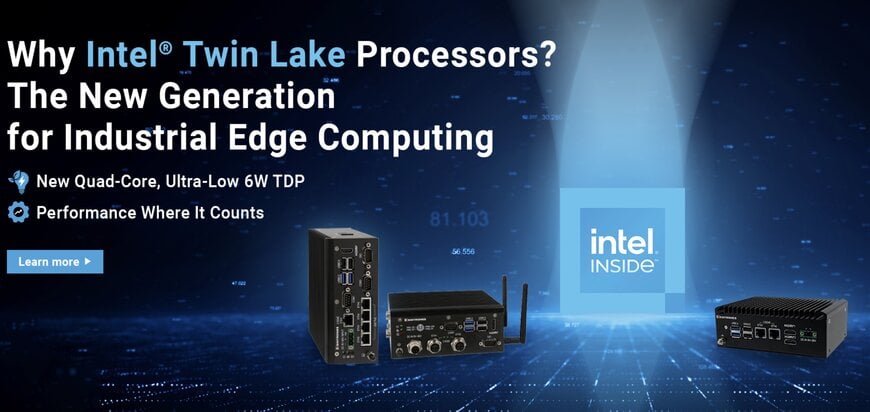
SINTRONES has introduced new embedded systems based on Intel’s Twin Lake Processor N-series, targeting industrial and edge computing applications that require low power consumption, predictable performance, and long-term product availability.
Twin Lake processors and industrial relevance
The Twin Lake family represents the next step in Intel’s low-power Processor N-series, succeeding the Alder Lake-N generation. It introduces two CPU variants designed for embedded use cases: a quad-core model optimized for ultra-low power operation and an octa-core model focused on higher compute throughput.
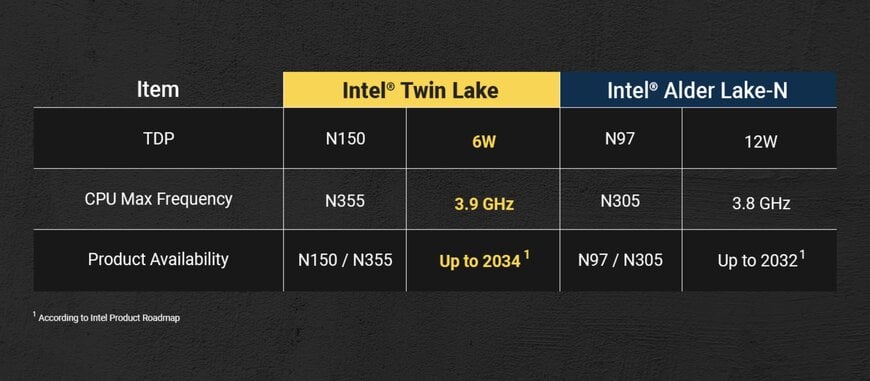
A key requirement in industrial automation, transportation, and retail infrastructure is long lifecycle availability. Twin Lake processors launched in early 2025 and are scheduled for availability through 2034, supporting system designs that must remain deployable, serviceable, and consistent over a decade or more.
Ultra-low power quad-core design
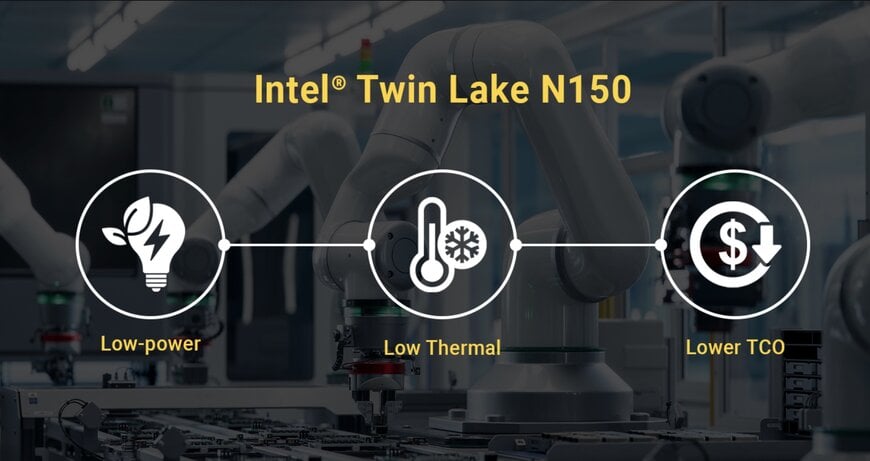
The quad-core Twin Lake N150 processor is built exclusively on efficient cores (E-cores) and operates with a thermal design power of 6 W. This represents a 50% reduction in CPU power consumption compared with the Alder Lake N97.
Such power characteristics are particularly relevant for large-scale deployments, where hundreds or thousands of embedded nodes may operate continuously. Lower per-device power draw directly reduces aggregate energy consumption, cooling requirements, and total cost of ownership in factory floors, retail networks, and distributed control systems.
Octa-core option for higher workloads
For applications requiring greater compute density, the Intel Core 3 Processor N355 offers eight cores with turbo frequencies up to 3.9 GHz and integrated graphics clocked up to 1.35 GHz. Compared with the Alder Lake Core i3-N305, the Twin Lake octa-core delivers an estimated 10% improvement in multi-threaded performance while maintaining a similar power envelope.
This performance profile supports more demanding edge workloads such as video analytics, data aggregation, and multi-protocol industrial communication without increasing system-level energy consumption.
SINTRONES system integration
Leveraging the Twin Lake architecture, SINTRONES has developed two fanless industrial computer platforms: SBOX-2625 and VBOX-3132. Both systems are designed around energy-efficient operation and extended deployment lifecycles, while supporting modern memory and I/O requirements.
Common platform characteristics include DDR5 memory support at 4800 MT/s, wide DC input ranges, extended operating temperature tolerance, and vibration-resistant, fanless enclosures. These features align with industrial standards for reliability in harsh or space-constrained environments.
Application-focused system differentiation
The SBOX-2625 is optimized for fixed-location edge roles such as IoT gateways, digital signage controllers, and compact HMI terminals. Its design emphasizes minimal power consumption, small physical footprint, and integrated hardware security via TPM, making it suitable for cost-sensitive, high-volume deployments.
The VBOX-3132 targets mobile and transportation-related environments, including smart surveillance, fleet management, and rail applications. Compliance with EN 50155 and E-Mark standards supports in-vehicle use, while integrated CAN FD, optional backup battery support, and Power over Ethernet simplify connectivity and data continuity in motion-centric systems.
Embedded edge application context
Twin Lake-based embedded systems address a growing requirement for predictable, low-latency edge computing without the energy overhead of higher-performance desktop or server-class processors. By combining reduced power draw, moderate performance scaling, and long-term availability, these platforms are suited to smart city infrastructure, intelligent transportation systems, and industrial automation nodes that must operate continuously with minimal maintenance.
For system designers, the transition from Alder Lake-N to Twin Lake offers a measurable efficiency improvement while preserving software compatibility and lifecycle stability—key factors in industrial embedded computing strategies.
www.sintrones.com
