
www.ptreview.co.uk
17
'26
Written on Modified on
Variable Speed Drive Systems for Industrial Hydraulic Efficiency
Danfoss Power Solutions introduces modular variable speed drive systems to optimize energy consumption and control precision within the automotive data ecosystem and digital supply chain.
www.danfoss.com
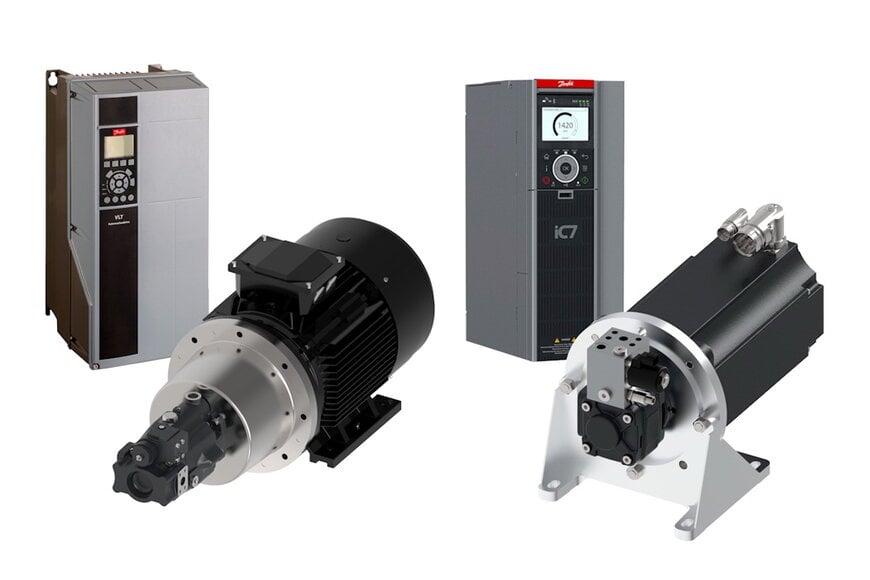
Danfoss Power Solutions has expanded its European, Middle Eastern, and African portfolios with the introduction of Vickers by Danfoss Variable Speed Drive (VSD) solutions. These systems, designed for discrete and process manufacturing, integrate hydraulic pumps, electric motors, and frequency drives to regulate motor speed based on real-time duty cycle demands.
Technical Architecture and Energy Performance
The VSD systems function by varying the rotational speed of the pump to match specific flow and pressure requirements, addressing the inefficiencies of traditional constant-speed architectures. This approach eliminates energy waste during idling or low-demand phases. Depending on the specific duty cycle of the machinery, these systems achieve energy savings of up to 60%.
The portfolio is divided into two primary technical configurations based on dynamic requirements:
- Induction Motor Solutions: Utilizing a PVM Code B axial piston pump and a VLT AutomationDrive FC 302, this open-loop control system is rated for applications between 3 kW and 250 kW. It provides energy reductions of 20% to 40% compared to fixed-speed systems.
- Servo Motor Solutions: This configuration employs VGPS internal gear pumps or PVMX axial piston pumps paired with an iC7-Automation drive. Using permanent magnet synchronous motor (PMSM) technology and proprietary p/Q control software, it manages closed-loop pressure and flow for applications up to 100 kW. This setup permits energy savings of 30% to 60%.
Thermal Management and Acoustic Impact
By increasing system efficiency, these VSD units minimize heat generation within the hydraulic circuit. This reduction in thermal load allows for the downsizing or total removal of oil coolers, which lowers the total installed cost and extends the operational life of hydraulic seals and fluids.
Furthermore, operating the motor and pump at reduced speeds during low-demand periods decreases the ambient noise level of the machinery. This facilitates greater flexibility in power unit placement and potentially removes the requirement for secondary acoustic insulation measures.
Component Downsizing and System Integration
The ability to utilize the full speed range of the motor allows for a reduction in pump displacement without compromising maximum oil flow. Because a smaller displacement pump requires less torque to achieve target pressures, and because electric motors can handle short-duration high-torque peaks via overload capabilities, engineers can specify smaller motor frames. This results in a reduced physical footprint and lower installed power requirements.
According to Juraj Bittner, Product Manager, Industrial Solutions at Danfoss Power Solutions, the integration of Danfoss drives with Vickers pumps creates a harmonized system that simplifies commissioning and operation. The p/Q control logic specifically targets the reduction of design and installation time by offering configurable parameters for pressure and flow.
Industrial Application Areas
VSD technology is particularly effective in manufacturing environments characterized by intermittent duty cycles where peak power is only required for a fraction of the operating time. Technical use cases include:
By increasing system efficiency, these VSD units minimize heat generation within the hydraulic circuit. This reduction in thermal load allows for the downsizing or total removal of oil coolers, which lowers the total installed cost and extends the operational life of hydraulic seals and fluids.
Furthermore, operating the motor and pump at reduced speeds during low-demand periods decreases the ambient noise level of the machinery. This facilitates greater flexibility in power unit placement and potentially removes the requirement for secondary acoustic insulation measures.
Component Downsizing and System Integration
The ability to utilize the full speed range of the motor allows for a reduction in pump displacement without compromising maximum oil flow. Because a smaller displacement pump requires less torque to achieve target pressures, and because electric motors can handle short-duration high-torque peaks via overload capabilities, engineers can specify smaller motor frames. This results in a reduced physical footprint and lower installed power requirements.
According to Juraj Bittner, Product Manager, Industrial Solutions at Danfoss Power Solutions, the integration of Danfoss drives with Vickers pumps creates a harmonized system that simplifies commissioning and operation. The p/Q control logic specifically targets the reduction of design and installation time by offering configurable parameters for pressure and flow.
Industrial Application Areas
VSD technology is particularly effective in manufacturing environments characterized by intermittent duty cycles where peak power is only required for a fraction of the operating time. Technical use cases include:
- Metal Forming and Presses: Precise pressure control during clamping and forming stages.
- Injection and Rubber Molding: Energy optimization during long cooling phases.
- Machine Tools and Die Casting: Improved thermal stability and reduced noise in high-precision environments.
- Food Processing: Reliable flow regulation for automated production lines.
