
www.ptreview.co.uk
01
'26
Written on Modified on
Calculating and Optimizing Electric Motor Operational Costs
Technidrive outlines strategies for measuring motor energy consumption and implementing efficiency improvements to reduce total cost of ownership.
www.technidrive.co.uk
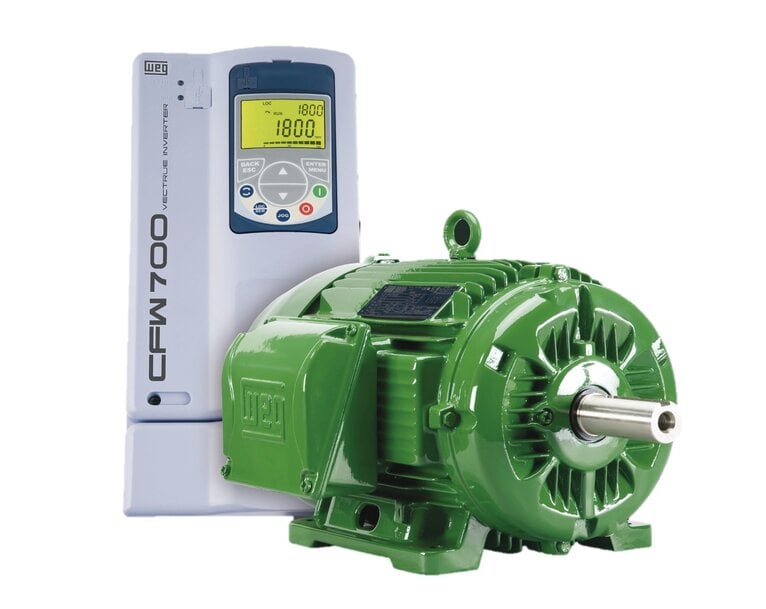
Electric motors serve as the primary mechanical driver for industrial applications, including pumps, fans, conveyors, and mixers. While the purchase of a motor is a one-time capital expense, it typically represents less than 2% of the total cost of ownership (TCO). The remaining 98% of the TCO is attributed almost exclusively to energy consumption during the motor's operational lifespan.
The Importance of Consumption Monitoring
Understanding specific energy consumption patterns provides significant financial and operational advantages for industrial businesses. Establishing a baseline through regular monitoring is essential for identifying cost drivers and spotting performance changes that may indicate mechanical issues. Without active tracking, implementing effective energy reduction strategies is functionally impossible.
Strategies for Improved Efficiency
David Strain, technical director at systems integrator Technidrive, highlights that managing motor costs requires analysis beyond standard energy billing. Businesses can utilize detailed consumption data to improve energy efficiency and reduce overall power usage. By calculating exact running costs, operators can make informed decisions regarding system optimizations and technology upgrades.
Additional Context
The disparity between a motor's purchase price and its lifetime energy cost highlights the critical importance of selecting high-efficiency models, such as those meeting IE3 or IE4 standards. In a typical industrial environment, a motor may run for thousands of hours annually; even a fractional increase in efficiency can lead to substantial cumulative savings.
Information needed to calculate running costs can be found on the motor nameplate or via modern energy meters. First, calculate energy usage in kWh by multiplying annual operating time by rated power. Losses can then be factored in using the efficiency rating to estimate total chargeable kWh. Multiplying this by the electricity tariff gives the annual running cost. For example, a 45 kW motor running continuously at €0.28/kWh could cost over €40,000 per year.
However, this base calculation must be adjusted for the motor's load factor and efficiency rating. Industrial systems integrators often recommend the installation of Variable Speed Drives (VSDs) to optimize these costs. A VSD allows a motor to adjust its speed to match the actual demand of the process, rather than running at constant full speed, which is particularly effective in centrifugal applications like fans and pumps where power consumption follows the Affinity Laws.
Edited by Romila DSilva, Induportals Editor, with AI assistance.
www.technidrive.co.uk
