
www.ptreview.co.uk
27
'26
Written on Modified on
Fraunhofer IPMS Develops AI-Based Portable Environmental Sensor
FastSense project combines GC-IMS sensor technology with AI to enable real-time detection of pollutants and hazardous substances in field conditions.
www.fraunhofer.de

© AI-generated/Fraunhofer IPMS: Protected forest through AI-supported, miniaturized sensor technology for environmental monitoring
Environmental monitoring, industrial safety, and civil security increasingly require fast, on-site detection of pollutants and hazardous substances. Fraunhofer Institute for Photonic Microsystems IPMS, together with Helmholtz Centre for Environmental Research UFZ and Center for Applied Research and Technology e.V. ZAFT, has launched the FastSense project to develop a portable measurement system combining advanced sensor technology with artificial intelligence.
The system is designed to detect volatile organic compounds (VOCs) and other analytes directly in the field, reducing reliance on laboratory-based analysis and enabling faster response to environmental changes.
Addressing delays in conventional environmental analysis
Monitoring ecosystems such as forests requires timely detection of stress indicators, including emissions of VOCs linked to drought, disease, or pest activity. Traditional measurement methods typically involve sample collection followed by laboratory analysis, resulting in delayed results and limited responsiveness.
The FastSense project aims to overcome these limitations by enabling rapid, in-situ detection of low-concentration substances, supporting earlier identification of environmental changes and potential risks.
Integration of GC-IMS and AI-based data analysis
The core of the system combines a fast gas chromatograph with a miniaturized ion mobility spectrometer (GC-IMS), enabling selective separation and detection of chemical compounds. This hardware is complemented by AI algorithms capable of analyzing complex three-dimensional datasets generated during measurement.
By processing this data in real time, the system can identify characteristic patterns and detect trace concentrations of relevant substances with high sensitivity. This integration of sensing and AI supports automated interpretation without requiring extensive manual analysis.
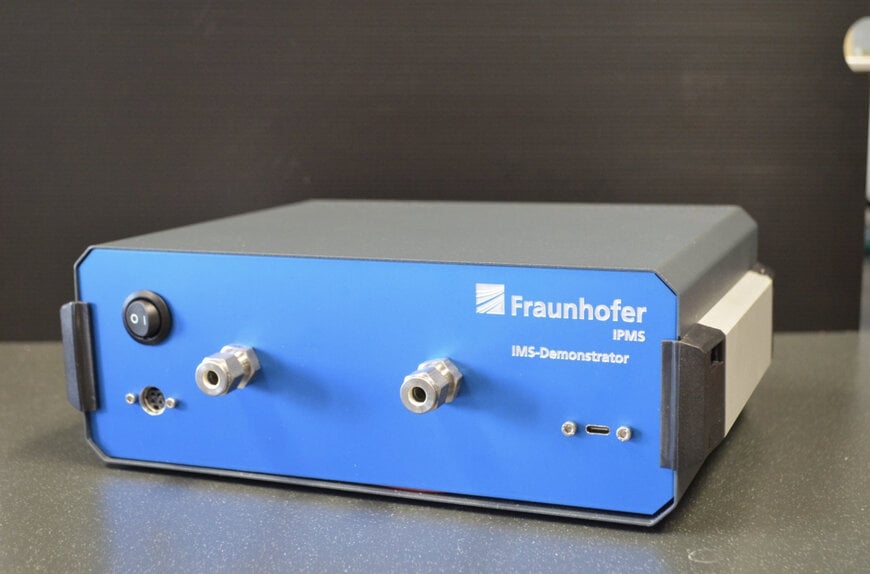
© Fraunhofer IPMS: Laboratory demonstrator as an ion mobility spectrometer based on a special IMS chip.
Portable design for field deployment
The system is being developed as a compact demonstrator suitable for use outside laboratory environments. Its portability allows deployment directly in forests, industrial sites, or other locations where rapid environmental assessment is required.
Testing under realistic conditions is a key part of the project, ensuring that the system performs reliably in variable environmental settings.
Applications in environmental monitoring and safety
The technology is intended for use in forest monitoring, where early detection of ecosystem stress can support conservation and management efforts. It also has potential applications in pollutant monitoring, enabling detection of emissions or contamination events.
Beyond environmental applications, the system can be used in civil security scenarios, such as identifying hazardous or explosive substances, as well as in industrial process monitoring where rapid chemical analysis is required.
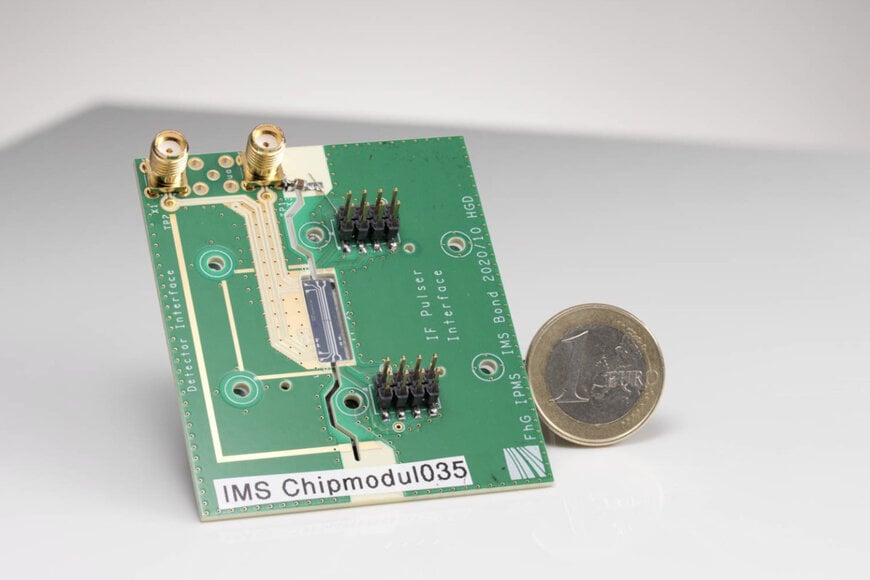
© Fraunhofer IPMS: IMS chip module for easy system integration into an ion mobility spectrometer.
Contribution of project partners
Fraunhofer IPMS is responsible for the development and integration of the sensor components, including the ion mobility spectrometer chip and associated electronics. The focus is on achieving miniaturization while maintaining high measurement sensitivity.
UFZ contributes expertise in environmental analysis and defines application-specific requirements, particularly for monitoring emissions in forest ecosystems. It also supports system validation using real-world samples.
ZAFT focuses on the development of AI-based evaluation methods, enabling rapid interpretation of GC-IMS data and supporting on-site usability of the system.
Positioning within environmental sensing technologies
Advanced environmental sensing solutions are also being developed by organizations such as TNO and Honeywell, which offer gas detection and monitoring technologies for industrial and environmental applications.
Key differentiators in this field include sensitivity, response time, portability, and the ability to process complex datasets in real time. The FastSense approach combines miniaturized hardware with AI-driven analysis to address these requirements.
Project timeline and outlook
The FastSense project runs from November 2025 to December 2027 and is co-funded by the European Union and regional public funding. The objective is to deliver a validated demonstrator capable of supporting practical applications in environmental monitoring and hazardous substance detection.
By integrating advanced sensing technologies with AI-based analysis, the project represents an approach to improving responsiveness and accuracy in monitoring complex environmental systems.
Edited by Natania Lyngdoh, Induportals Editor — Adapted by AI.
www.ipms.fraunhofer.com
Environmental monitoring, industrial safety, and civil security increasingly require fast, on-site detection of pollutants and hazardous substances. Fraunhofer Institute for Photonic Microsystems IPMS, together with Helmholtz Centre for Environmental Research UFZ and Center for Applied Research and Technology e.V. ZAFT, has launched the FastSense project to develop a portable measurement system combining advanced sensor technology with artificial intelligence.
The system is designed to detect volatile organic compounds (VOCs) and other analytes directly in the field, reducing reliance on laboratory-based analysis and enabling faster response to environmental changes.
Addressing delays in conventional environmental analysis
Monitoring ecosystems such as forests requires timely detection of stress indicators, including emissions of VOCs linked to drought, disease, or pest activity. Traditional measurement methods typically involve sample collection followed by laboratory analysis, resulting in delayed results and limited responsiveness.
The FastSense project aims to overcome these limitations by enabling rapid, in-situ detection of low-concentration substances, supporting earlier identification of environmental changes and potential risks.
Integration of GC-IMS and AI-based data analysis
The core of the system combines a fast gas chromatograph with a miniaturized ion mobility spectrometer (GC-IMS), enabling selective separation and detection of chemical compounds. This hardware is complemented by AI algorithms capable of analyzing complex three-dimensional datasets generated during measurement.
By processing this data in real time, the system can identify characteristic patterns and detect trace concentrations of relevant substances with high sensitivity. This integration of sensing and AI supports automated interpretation without requiring extensive manual analysis.
© Fraunhofer IPMS: Laboratory demonstrator as an ion mobility spectrometer based on a special IMS chip.
Portable design for field deployment
The system is being developed as a compact demonstrator suitable for use outside laboratory environments. Its portability allows deployment directly in forests, industrial sites, or other locations where rapid environmental assessment is required.
Testing under realistic conditions is a key part of the project, ensuring that the system performs reliably in variable environmental settings.
Applications in environmental monitoring and safety
The technology is intended for use in forest monitoring, where early detection of ecosystem stress can support conservation and management efforts. It also has potential applications in pollutant monitoring, enabling detection of emissions or contamination events.
Beyond environmental applications, the system can be used in civil security scenarios, such as identifying hazardous or explosive substances, as well as in industrial process monitoring where rapid chemical analysis is required.
© Fraunhofer IPMS: IMS chip module for easy system integration into an ion mobility spectrometer.
Contribution of project partners
Fraunhofer IPMS is responsible for the development and integration of the sensor components, including the ion mobility spectrometer chip and associated electronics. The focus is on achieving miniaturization while maintaining high measurement sensitivity.
UFZ contributes expertise in environmental analysis and defines application-specific requirements, particularly for monitoring emissions in forest ecosystems. It also supports system validation using real-world samples.
ZAFT focuses on the development of AI-based evaluation methods, enabling rapid interpretation of GC-IMS data and supporting on-site usability of the system.
Positioning within environmental sensing technologies
Advanced environmental sensing solutions are also being developed by organizations such as TNO and Honeywell, which offer gas detection and monitoring technologies for industrial and environmental applications.
Key differentiators in this field include sensitivity, response time, portability, and the ability to process complex datasets in real time. The FastSense approach combines miniaturized hardware with AI-driven analysis to address these requirements.
Project timeline and outlook
The FastSense project runs from November 2025 to December 2027 and is co-funded by the European Union and regional public funding. The objective is to deliver a validated demonstrator capable of supporting practical applications in environmental monitoring and hazardous substance detection.
By integrating advanced sensing technologies with AI-based analysis, the project represents an approach to improving responsiveness and accuracy in monitoring complex environmental systems.
Edited by Natania Lyngdoh, Induportals Editor — Adapted by AI.
www.ipms.fraunhofer.com
