
Beckhoff integrates physical AI into machine control systems
Natural language interfaces and LLMs enable direct interaction with automation systems via standardized protocols at Hannover Messe 2026.
www.beckhoff.com
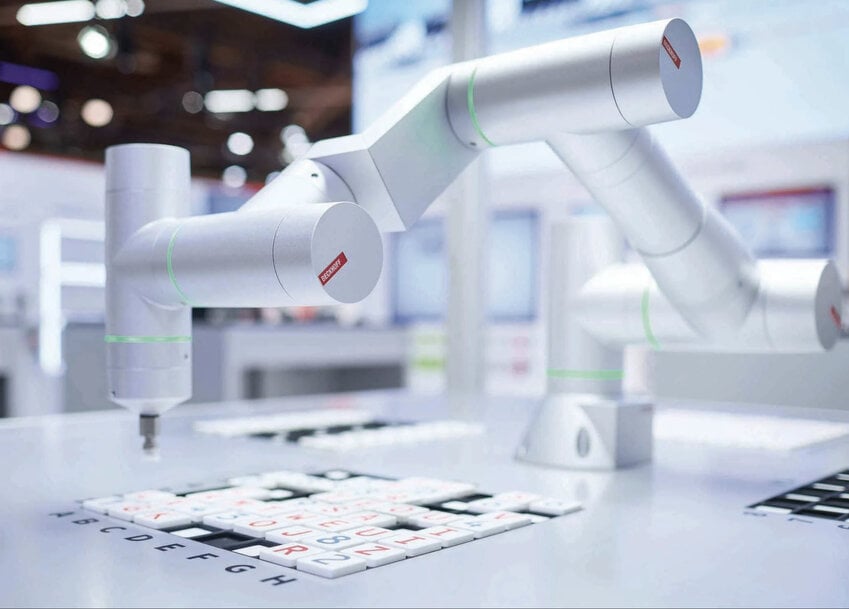
Industrial automation, robotics, and smart manufacturing are evolving toward more adaptive and intuitive control systems. In this context, Beckhoff Automation is presenting new developments in physical AI at Hannover Messe 2026 (Hannover, Germany, 20–24 April 2026), demonstrating how large language models (LLMs) can directly influence real-time machine operations through standardized interfaces.
The concept of physical AI combines artificial intelligence with deterministic control systems, enabling machines to move beyond fixed programming logic and respond dynamically to user input and operational context.
Natural language control for industrial automation
At the core of Beckhoff’s approach is the integration of LLMs into control environments via its TwinCAT ecosystem. Using the software tool TwinCAT CoAgent and a voice interface, machine instructions can be generated through natural language rather than conventional programming.
This allows users without specialized coding knowledge to perform complex automation tasks, as the system translates spoken commands into executable machine instructions. The control architecture leverages the Model Context Protocol (MCP), which enables structured communication between AI models and industrial control systems.
From commands to real-time machine execution
Unlike traditional human-machine interfaces, where inputs are predefined and limited, physical AI systems interpret intent and generate context-aware actions. In the demonstrated setup, the control system acts as an intelligent agent that:
- Translates spoken language into machine-level commands
- Performs path planning for robotic movement
- Executes diagnostic and monitoring functions in real time
Demonstration with modular robotics system
The application is demonstrated using the ATRO modular industrial robot system, which is fully controlled via voice commands through TwinCAT CoAgent for Operations. The system showcases how AI-driven control can be applied in real-world automation scenarios.
To illustrate the concept interactively, the robot performs a chess-playing task against visitors. While simplified for demonstration purposes, this scenario highlights the system’s ability to interpret commands, plan actions, and execute precise movements in response to dynamic input.
AI-supported lifecycle integration
Beyond real-time control, Beckhoff’s ecosystem includes tools such as TwinCAT Machine Learning Creator, supporting machine builders across the entire lifecycle:
- Engineering phase: AI-assisted code generation and system configuration
- Operation phase: Continuous monitoring and data-driven diagnostics
- Optimization: Identification and resolution of performance issues
This integrated approach enables consistent use of AI from development through deployment and maintenance.
Toward adaptive and accessible automation systems
The integration of physical AI represents a shift toward more accessible and flexible automation technologies. By combining deterministic control with AI-driven interpretation, systems can adapt to changing requirements without extensive reprogramming.
According to Hans Beckhoff, the development focuses on enabling language models to interact directly with machine control environments through emerging standards such as MCP. This approach reflects broader trends in industrial automation, where interoperability, usability, and adaptability are becoming key selection criteria.
The presentation at Hannover Messe 2026 demonstrates how natural language interfaces and AI models can be embedded into industrial systems, offering a pathway toward more intuitive and responsive machine operation in manufacturing environments.
Edited by Natania Lyngdoh, Induportals Editor — Adapted by AI.
www.beckhoff.com
