
www.ptreview.co.uk
02
'26
Written on Modified on
Edge computing architectures for automated defect detection
SINTRONES introduces a series of rugged AI platforms designed to manage thermal loads and process high-bandwidth visual data in precision manufacturing environments.
www.sintrones.com
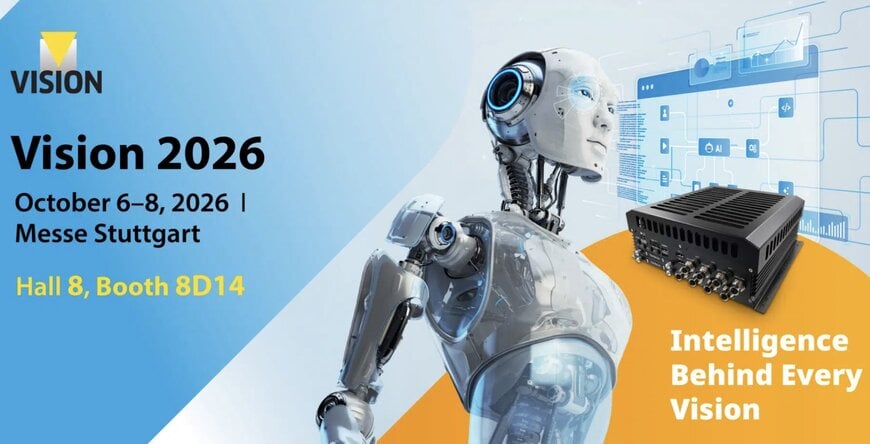
SINTRONES has released a portfolio of edge AI computing platforms, including the ABOX and IBOX series, tailored for automated optical inspection (AOI) and semiconductor manufacturing. These systems integrate high-bandwidth networking, expandable processing power, and advanced thermal management to facilitate real-time image processing and defect detection within industrial automation frameworks.
Processing requirements for optical inspection
As semiconductor components scale down in physical size, machine vision systems require increased data throughput and processing capabilities to identify microscopic defects at production speeds. High-resolution imaging, 3D vision, and deep learning models necessitate sustained computing performance and thermal stability to prevent system throttling during continuous operation. SINTRONES addresses these computational demands by providing edge architectures that manage complex AI models and high-speed visual data streams for real-time quality control.
“As semiconductor inspection moves toward higher resolution and more sophisticated AI models, computing performance alone is no longer enough. Sustained performance, thermal stability, and high-speed image processing are becoming equally critical,” states Kevin Hsu, CEO of SINTRONES.
Hardware deployment and thermal management
The company is presenting these hardware solutions at the VISION 2026 trade show, held October 6–8 at Messe Stuttgart in Germany (Hall 8, Booth 8D14). The primary lineup includes the ABOX-5221(P)(G)-IP66, which utilizes Intel Core Series 2 processors and optional Intel Arc GPU acceleration. The system supports up to 96GB of DDR5 memory and features an IP66-rated enclosure to prevent dust and water ingress. It handles multi-camera data ingestion via dual 10GbE ports and four 2.5GbE connections equipped with optional Power over Ethernet (PoE+).
To manage the thermal output of compute-intensive vision workloads, the ABOX-5221(P)(G)-LC variant incorporates a patented fanless, pumpless phase-change liquid cooling mechanism. This proprietary thermal design improves heat dissipation efficiency by up to five times compared to standard cooling methods, allowing the system to maintain peak processing frequencies without thermal throttling. Furthermore, the newly introduced ABOX-5222E chassis incorporates dual PCIe x16 slots, enabling operators to scale GPU and vision expansion cards as deep learning inspection workloads expand.
Multi-camera interfaces and spatial analysis
For applications requiring spatial awareness and synchronized multi-angle inspection, the platforms deploy Gigabit Multimedia Serial Link (GMSL2) interfaces. The compact IBOX-604-G2 platform processes data from dual GMSL2 cameras to perform real-time 3D object detection and depth estimation. For broader industrial inspection, the ruggedized IBOX-601-M12X provides four GMSL2 connections, enabling concurrent multi-camera AI inference directly on the manufacturing floor. These interfaces allow industrial operators to deploy scalable computer vision systems that maintain high frame rates and low latency across extended cable lengths.
Additional Context
This section details technical specifications and competitive benchmarking not included in the original news release.
Within the industrial edge computing sector, rugged AI platforms for machine vision compete primarily on thermal management, interface bandwidth, and resistance to environmental ingress. The SINTRONES ABOX and IBOX series compete directly with industrial vision controllers from manufacturers such as Neousys Technology, Advantech, and Vecow. While many traditional edge AI systems rely on passive finned aluminum heatsinks or active fan cooling, the integration of pumpless phase-change liquid cooling in the ABOX-5221-LC establishes a distinct thermal benchmark. This mechanism allows the platform to sustain maximum thermal design power (TDP) for processors and localized GPUs without the mechanical wear associated with liquid pumps or fans in high-temperature manufacturing environments. Furthermore, native integration of GMSL2 interfaces—a standard predominantly utilized in advanced driver-assistance systems (ADAS)—gives these systems an advantage over standard USB or GigE vision controllers by enabling high-bandwidth, uncompressed video data transmission over longer coaxial cables with significantly lower latency.
Edited by Aishwarya Mambet, Induportals Editor, with AI assistance.
www.sintrones.com
