
www.ptreview.co.uk
07
'26
Written on Modified on
Aptiv and Comau Expand Industrial Automation Development
The collaboration focuses on robotics, edge computing, and autonomous logistics systems for manufacturing and warehouse automation environments.
www.comau.com
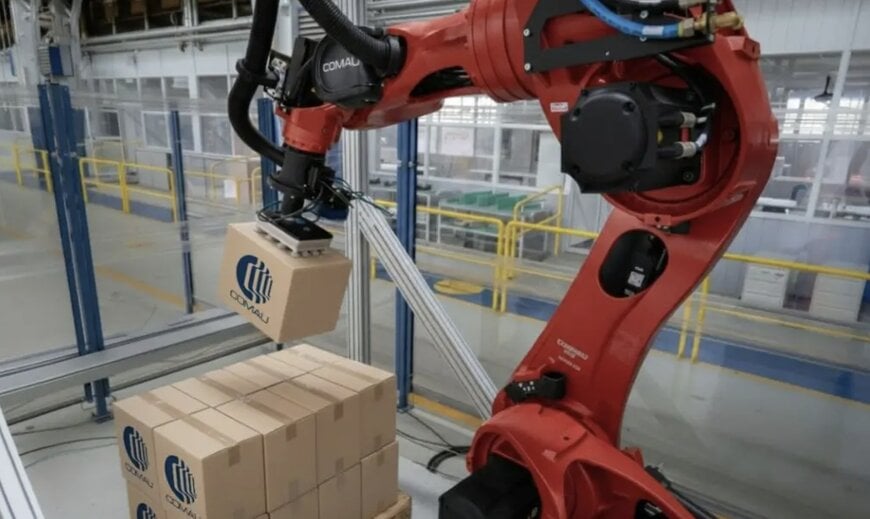
Industrial automation systems are increasingly integrating AI processing, real-time sensing, and autonomous decision-making to support manufacturing efficiency and warehouse operations. As robotics platforms become more software-defined, industrial operators are seeking automation architectures that combine perception, connectivity, and deterministic control with scalable deployment capabilities. In this context, Aptiv PLC and Comau announced a joint development collaboration focused on next-generation robotics, autonomous systems, and industrial logistics technologies.
Combining robotics with edge intelligence
The collaboration framework, formalized through a Memorandum of Understanding, targets industrial automation applications requiring real-time data processing, autonomous navigation, and integrated machine control. The initiative combines Aptiv’s software, sensing, and high-performance connectivity technologies with Comau’s robotics and industrial deployment expertise.
The project will initially focus on advanced robotics platforms, including autonomous mobile robots (AMRs), collaborative robots (CoBots), and other autonomous industrial systems. These platforms will incorporate perception technologies and reference architectures designed for real-time environmental awareness and autonomous operation in manufacturing and logistics facilities.
The systems are expected to be validated through industrial use cases developed within Comau’s existing automation environments.
Warehouse automation moves closer to edge-based AI
One of the primary development areas involves warehouse and logistics automation, where industrial operators are increasingly adopting edge computing to reduce latency and improve operational responsiveness. The collaboration plans to extend Comau’s Automha logistics software using Wind River cloud and edge technologies to support AI and machine learning processing at the network edge.
This architecture is intended to improve system responsiveness and lifecycle management across logistics operations while reducing dependency on centralized computing infrastructure. Edge AI deployment is becoming increasingly relevant in automated warehousing, where autonomous systems must process sensor inputs and operational decisions with minimal delay.
The collaboration also builds on existing use of Wind River’s VxWorks real-time operating system in Comau industrial controllers, providing continuity between software infrastructure and robotic control systems.
Industrial connectivity and machine safety
Another focus area involves high-performance interconnect technologies for robotics and autonomous systems operating in industrial environments. Aptiv’s portfolio includes cabling systems, module connectors, micro-connectors, and cable assemblies designed to support durability, reduced weight, and signal reliability in robotic applications exposed to continuous motion and harsh operating conditions.
The companies are also exploring radar- and image-based industrial safety architectures designed for multi-zone monitoring and deterministic data processing. These systems are intended to support worker protection in automated facilities while reducing system complexity associated with traditional industrial safety infrastructure.
Such sensor-based safety systems are increasingly being integrated into collaborative automation environments where robots, autonomous vehicles, and human operators share production and logistics spaces.
Existing industrial deployments shape the collaboration
The partnership extends an existing technology relationship between the two companies. Comau has previously integrated Wind River VxWorks into its industrial controllers, while Aptiv manufacturing facilities already deploy Comau robotic systems in production operations.
Under the broader collaboration, the companies plan to expand integration across Aptiv’s sensing, perception, connectivity, and high-performance computing technologies to support industrial automation systems with higher levels of autonomy and operational intelligence.
The collaboration reflects wider industrial automation trends where robotics, edge AI, industrial connectivity, and autonomous logistics systems are increasingly converging within digitally connected manufacturing
Edited by Aishwarya Mambet, Induportals Editor, with AI assistance.
www.comau.com
