
www.ptreview.co.uk
06
'26
Written on Modified on
Machine Vision Systems for Intralogistics Automation
At LogiMAT 2026, EMVA members demonstrate camera systems, edge AI, and lighting technologies supporting automated warehouse and robotics operations.
www.emva.org
Automated warehouses rely on machine vision to enable navigation, inspection, and object recognition in high-throughput logistics environments. In this context, the European Machine Vision Association (EMVA) and several member companies will present machine vision technologies for intralogistics at LogiMAT 2026, taking place March 24–26 at Messe Stuttgart.
Machine vision at the center of warehouse automation
Autonomous guided vehicles (AGVs), autonomous mobile robots (AMRs), robotic picking systems, and automated forklifts depend on reliable perception technologies to navigate and interact with goods. Machine vision provides the sensing layer for these systems, enabling tasks such as barcode recognition, object localization, dimensional measurement, and robotic manipulation.
At the EMVA joint stand in Hall 2, Booth 2C14, participating companies will demonstrate how cameras, lighting, industrial computing, and installation infrastructure combine to form the perception stack used in modern intralogistics automation.
Edge computing and robotics integration
Advantech’s Industrial IoT Division will present technologies combining NVIDIA-based edge computing, machine vision, and robotics for warehouse automation. These systems provide the processing capability required for camera-based navigation, vision-guided material handling, and robotic control in logistics operations.
The architecture supports applications including AGVs, AMRs, autonomous forklifts, and mobile manipulators. By processing sensor data close to the machines, edge AI platforms can reduce latency and support real-time decision making within automated logistics workflows.
3D cameras for picking and automated transport
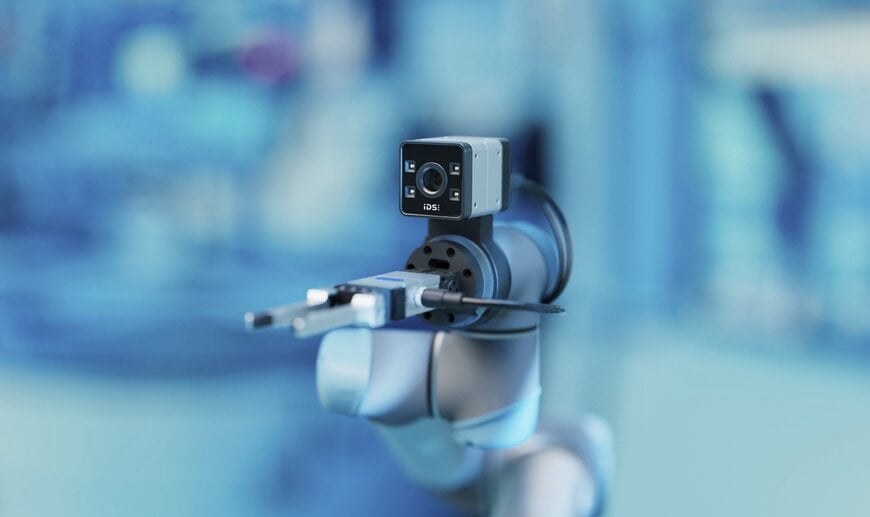
IDS will showcase the Nion 3D camera, designed to capture depth data for logistics automation tasks such as picking, sorting, and automated transport. The system uses a 1.2-megapixel time-of-flight sensor that produces real-time depth information for object detection and positioning.
The camera features an IP67-rated enclosure and a 940-nm laser illumination source, allowing operation in environments with limited lighting or direct sunlight. Integrated processing generates clear images of moving objects, supporting logistics processes where items must be detected and localized while in motion.
Lighting systems for high-speed inspection
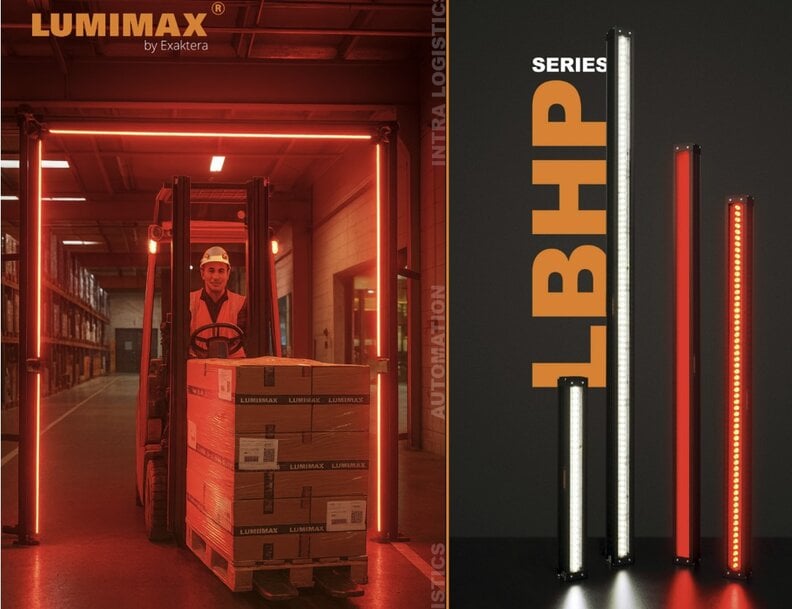
Reliable imaging in high-speed logistics requires illumination capable of freezing motion and maintaining contrast across different package surfaces. iiM will present lighting solutions from the LUMIMAX® series, designed for automation and intralogistics applications.
The LBHP modular bar light series delivers uniform illumination for large inspection areas, such as gantry-based scanning systems. With intensities up to one million lux and integrated control electronics, the lighting enables motion-free image capture at inspection rates of up to 100 inspections per second, supporting OCR and barcode reading in conveyor-based sorting systems.
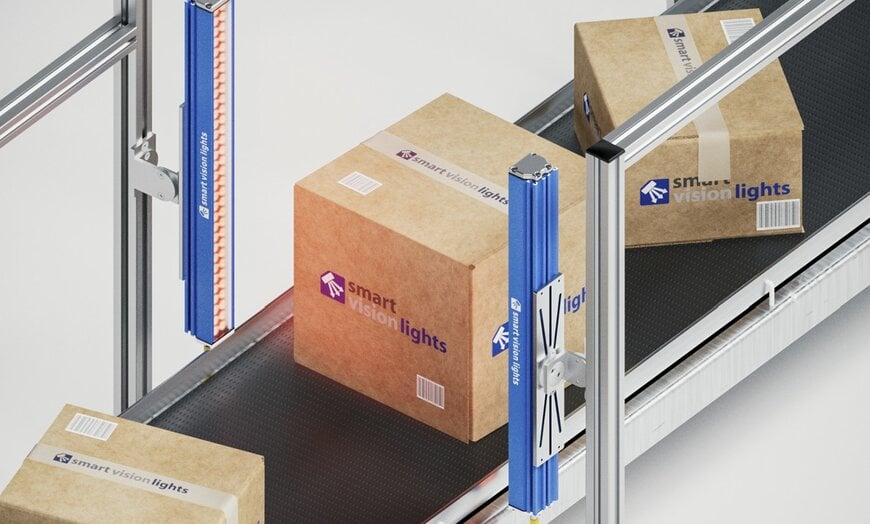
Smart Vision Lights will demonstrate its Lightgistics Series, developed for high-speed logistics environments. When used with Hidden Strobe™, the lighting system removes visible flashing while retaining the benefits of strobing illumination. Combined with Dual OverDrive™ technology, the lights provide high brightness for reliable barcode reading, OCR, and optical character verification across different package materials and transport speeds.
Simplifying machine vision integration
Murrelektronik will present installation solutions designed to simplify camera integration in industrial vision systems. The infrastructure supports scalable configurations ranging from single-camera installations to multi-camera networks.
Pre-assembled plug-and-play cabling based on internationally recognized standards reduces wiring complexity and enables faster deployment of vision systems. The design remains camera-agnostic, allowing integration with multiple machine vision brands and enabling modular automation architectures.
Edge AI platforms for warehouse robotics
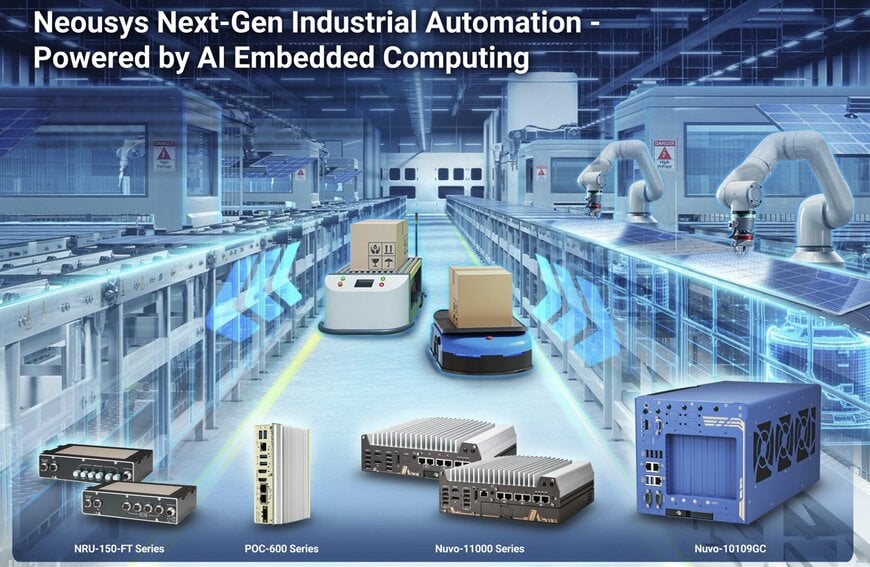
Neousys will introduce rugged edge AI computers, fanless industrial PCs, and ultra-compact computing platforms designed for logistics automation. Systems based on NVIDIA Jetson processors support vision processing for mobile robots and autonomous forklifts.
These computing platforms enable tasks such as pallet detection, navigation, and obstacle avoidance in robotic vehicles. Industrial PCs support high-throughput operations including sorting, scanning, and conveyor automation, while compact computers bring processing capability to space-constrained platforms such as mobile carts or robotic systems.
3D measurement and inspection in motion
Teledyne will showcase 3D vision solutions designed for high-speed intralogistics environments. Demonstrations will include on-the-fly dimensioning of packed goods, capable of measuring length, width, and height as pallets move past on fast-moving forklifts.
The company will also present a high-resolution 3D stereo vision system designed for inspection, volume measurement, and automation in warehouse and logistics operations where accurate measurement of moving goods is required.
Machine vision as an enabling layer in digital logistics
The technologies presented at the EMVA joint stand illustrate how cameras, lighting, edge AI computing, and system integration infrastructure combine to support automation in warehouse environments. These components form the perception layer required for digital supply chain operations, where goods must be identified, measured, tracked, and handled automatically.
By integrating sensing, computing, and connectivity technologies, machine vision systems enable logistics facilities to automate picking, transport, inspection, and inventory tracking processes across high-throughput intralogistics operations.
www.emva.com
