
www.ptreview.co.uk
24
'26
Written on Modified on
Autonomous Transloading System for Rail-to-Road Logistics
Logic combines robotic pallet transport with digital twin modeling to automate intermodal transfers and improve data visibility across freight operations.
logic-os.com
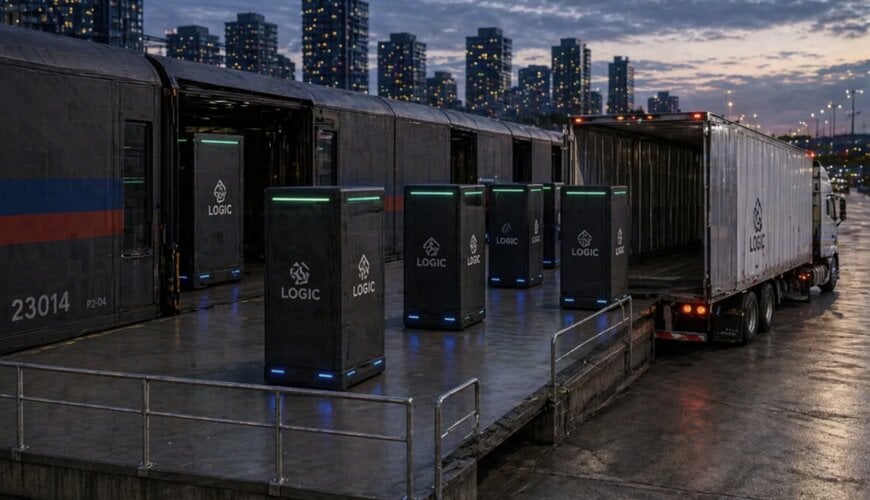
Rail-to-road transfer points remain a bottleneck in freight logistics, where manual handling and forklift-based workflows limit throughput and introduce variability. In this context, Logic has introduced an intelligent transloading system combining the Logic Pallet and its Digital Twin Operating System to automate intermodal transfers and improve operational visibility.
Automating the transfer between rail and road
The system is designed for intermodal terminals where goods move between railcars and trucks. The Logic Pallet functions as an autonomous mobile unit capable of self-loading and self-unloading cargo, reducing reliance on manual labor and lift equipment.
By replacing forklift-dependent workflows, the system standardizes transfer operations and reduces handling steps. This approach supports higher throughput and more predictable cycle times, particularly in facilities managing variable freight volumes.
Digital twin modeling for operational coordination
At the core of the system is the Logic Digital Twin Operating System, which creates a real-time virtual model of the transloading environment. The platform aggregates data from each Logic Pallet, tracking parameters such as inventory position, load weight, and task execution status.
This digital twin enables simulation of traffic flows within the terminal, allowing the system to identify potential congestion points and adjust pallet movements dynamically. Workloads are distributed across the fleet based on real-time conditions, supporting balanced operations under fluctuating demand.
Such coordination aligns with broader trends in digital supply chain management, where physical operations are continuously synchronized with data-driven control systems.
Data capture across intermodal workflows
Each Logic Pallet collects operational data during transfers, including cargo weight and inventory details. This information is integrated into the system to maintain continuity between rail and road segments.
The resulting dataset supports improved shipment tracking, routing accuracy, and demand forecasting. By linking physical handling processes with data capture, the system provides logistics operators with a consistent view of asset movement across facilities.
Impact on terminal operations and safety
Automating transloading reduces dependence on forklifts and manual handling, which are associated with operational delays and safety risks in busy terminals. Autonomous pallet movement introduces more controlled material flow, reducing variability in handling processes.
In practical terms, this can improve equipment utilization and reduce idle time during loading and unloading cycles. It also supports safer working conditions by limiting human interaction with heavy handling equipment.
Toward coordinated and scalable logistics systems
The combination of autonomous transport units and digital twin control reflects a shift toward integrated logistics systems where movement, monitoring, and decision-making are closely linked. By enabling coordinated operations across multiple pallets and transfer points, the system supports scalable deployment in intermodal environments.
This approach allows rail operators, freight terminals, and third-party logistics providers to manage increasing freight volumes with more consistent performance, while maintaining visibility across the broader logistics network.
Edited by Aishwarya Mambet, Induportals Editor, with AI assistance.
www.logic-os.com
